Valley Forge NHP: Where Joggers Meet Reenactors
The JPM Trail, Washington's Headquarters, and Mount Misery. Here's how to visit Valley Forge.
Key Takeaways
- Free Admission: Admission to the park is completely free. There are no entrance fees or parking fees for any of the major historical monuments or trails.
- Parking Strategy: Don’t try to hike the entire park from the Visitor Center. Use the move-between-lots strategy: drive the 10-mile auto tour loop and park at designated pull-offs for the Arch, log cabins, and the Headquarters.
- The “Yellow Springs” Hack: To avoid the massive fitness crowds on the paved JPM loop, park at the Yellow Springs Road lot. It provides immediate access to the wooded, quieter trails of Mount Misery.
- Washington’s Headquarters: This is the park’s “must-see” interior. It’s located at the train station parking area. If the lot is full, use the trolley (seasonal fee) from the Visitor Center for guaranteed access.
- Hilly Pavement: The 5-mile Joseph Plumb Martin loop is not flat. It features two significant climbs (Redoubt #3 and #5) that can be challenging for casual cyclists and families with young kids.
Valley Forge National Historical Park is two parks in one. For locals, it is a 5-mile paved fitness loop. For tourists, it is a 3,500-acre memorial to the 1777-1778 Continental Army winter encampment.
For tourists, it is the site of the 1777-1778 winter encampment. You will find Washington’s Headquarters, reconstructed log cabins, and Revolutionary War monuments.
The Joseph Plumb Martin Trail connects these sites. It is hilly, not flat. On a Saturday morning, you will pass runners in Lycra and families reading plaques about the Continental Army.
If you want actual hiking in the woods, head to Mount Misery and Mount Joy. The park is free to enter, and you will share the space with two very different crowds.
During the winter of 1777-1778, approximately 12,000 Continental Army soldiers endured brutal conditions here, with 2,000-3,000 dying from disease. Under Baron von Steuben’s training, the army transformed into a professional fighting force.
Visit the National Park Service site for hours and events, check Valley Forge Tourism for visitor info, and see AllTrails for trail conditions.
The Joseph Plumb Martin Trail (The Main Loop)
What It Is
The Joseph Plumb Martin Trail (JPM) is a 5-mile paved loop that connects the major historical sites in the park. It’s named after a Continental Army soldier who kept a diary during the encampment.
What to Expect
- Surface: Fully paved, but hilly. There are steep sections (up to 10% grade). It’s not the flat, easy loop many expect
- Terrain Reality: The loop has two significant climbs (Redoubt #3 and Redoubt #5). You’ll work for those 5 miles
- Crowds: Very popular with local runners and cyclists, especially on weekend mornings (8-11 AM Saturday-Sunday). It’s practically a fitness track for the Philadelphia area
- Highlights: Passes the National Memorial Arch, artillery displays, reconstructed log cabins, and Washington’s Headquarters
- Time Reality: 5 miles on pavement takes 20-40 minutes depending on pace and stops. Fitness crowd does it in 20-30 minutes
- Fitness Level: Intermediate (not beginner). Those expecting a “flat, easy” park loop will be disappointed. Good leg workout
- Historical Immersion: You’ll read plaques and pass monuments constantly. It’s as much a history lesson as exercise
Not a Flat Rail Trail
Don’t expect a flat, easy loop. The JPM Trail has rolling hills and two steep climbs. If you’re biking with young kids, be prepared for some walking.
Mount Misery & Mount Joy (The Real Hiking)
If you want to hike in the woods instead of on pavement, head to Mount Misery and Mount Joy.
Mount Joy
Moderate trail through the woods. Great views from the top. Access from the main park area (near Washington’s Headquarters).
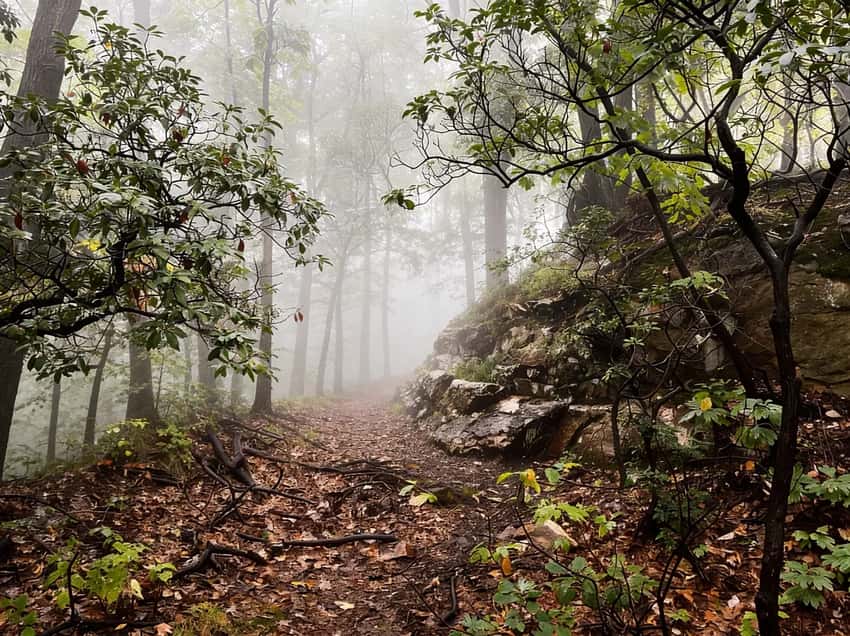
Mount Joy offers moderate wooded hiking with rewarding summit views
What to Expect
- Trail Type: Dirt and gravel, rocky sections. Not as manicured as the JPM Trail
- Difficulty: Moderate. Gradual elevation gain. Nothing too steep
- Time Reality: 2-3 miles (depending on loop), takes 1.5-2 hours for fit hikers
- Crowds: Quieter than the JPM Trail. Most visitors stick to pavement
- View: Summit offers views of the park and surrounding Valley Forge area. Not panoramic but nice
- Fitness Level: Moderate hiking fitness needed. Not beginner-friendly but not strenuous
Mount Misery
Steeper and quieter than Mount Joy. Access from Yellow Springs Road (the quieter side of the park).
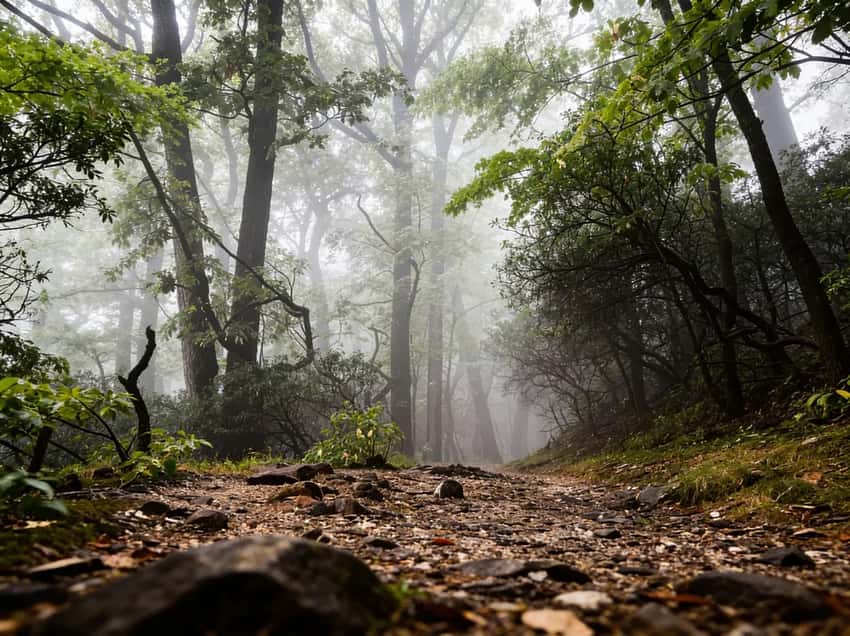
Mount Misery provides a steep and quiet escape from the park’s main crowds
What to Expect
- Steepness: More elevation gain than Mount Joy. Steep sections interspersed with easier walking
- Crowds: Much quieter. The Visitor Center and JPM Trail draw most people. Yellow Springs Road feels remote
- Trail Condition: Rocky and rooted. Proper hiking boots recommended. Can be muddy after rain
- Isolation: This is where you go if you want to escape the fitness crowd. Feel of a real forest hike
- Time Reality: 2-4 miles depending on how much you explore. 2-3 hours round trip
The Loop
Combine Mount Joy and Mount Misery for a ~4-mile moderate hike. Dirt and gravel trails, rocky sections. Proper hiking boots recommended.
Loop What to Expect
- Distance: 4-5 miles total
- Elevation: 400-500 feet cumulative
- Difficulty: Moderate to moderately strenuous
- Time: 2.5-3.5 hours for fit hikers
- Crowds: Very quiet. You’ll see few other hikers
- Experience: This is the “real hiking” at Valley Forge, woods, quiet, away from the fitness track
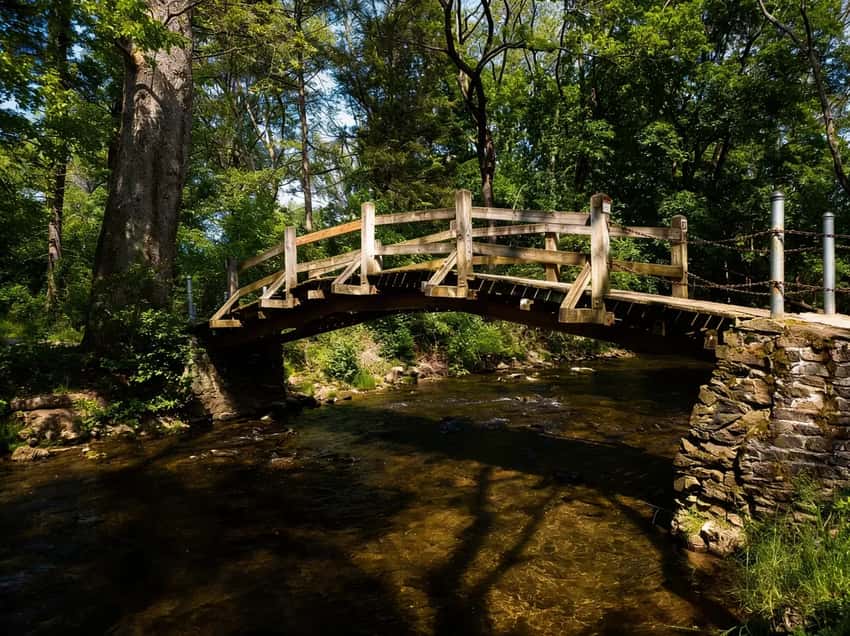
Valley Creek runs along the base of Mount Misery and Mount Joy
The History (What You’re Here For)
Washington’s Headquarters
The original stone house where George Washington stayed during the winter of 1777-1778. Open daily. Short walk from the train station parking or the JPM Trail.
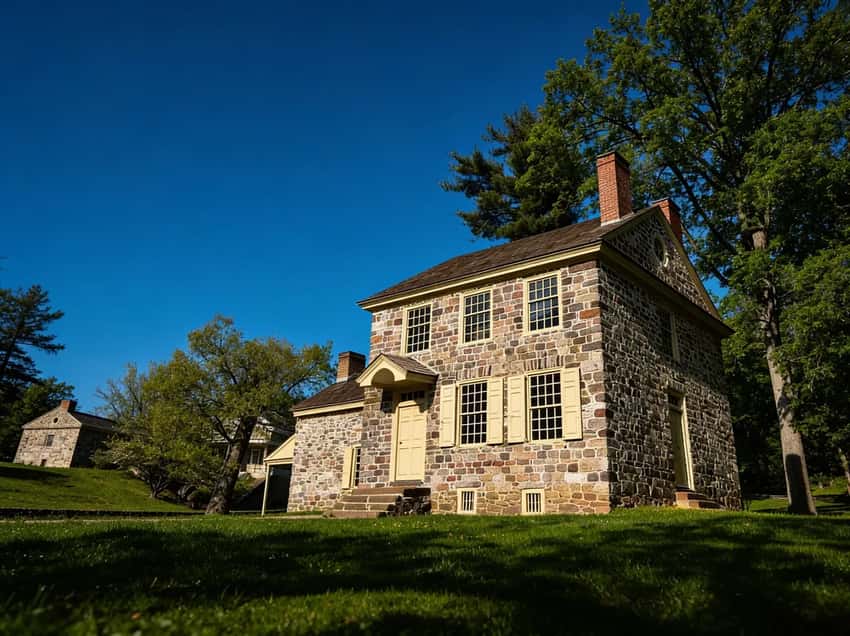
George Washington’s original headquarters during the brutal 1777-1778 winter encampment
Muhlenberg’s Brigade (Log Cabins)
Reconstructed log cabins showing how Continental Army soldiers lived during the encampment. Interactive displays where you can walk inside. Great for kids.
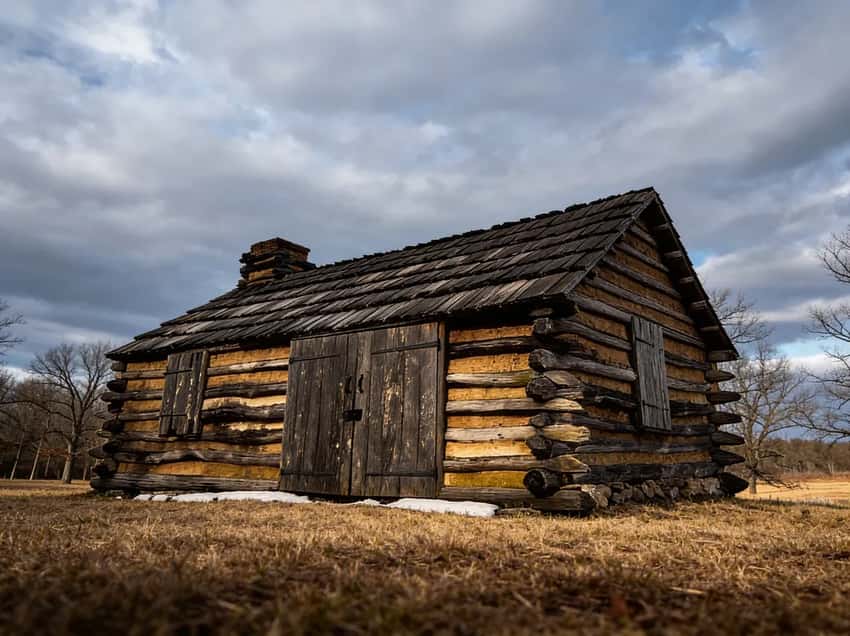
Interactive reconstructed log cabins of Muhlenberg’s Brigade
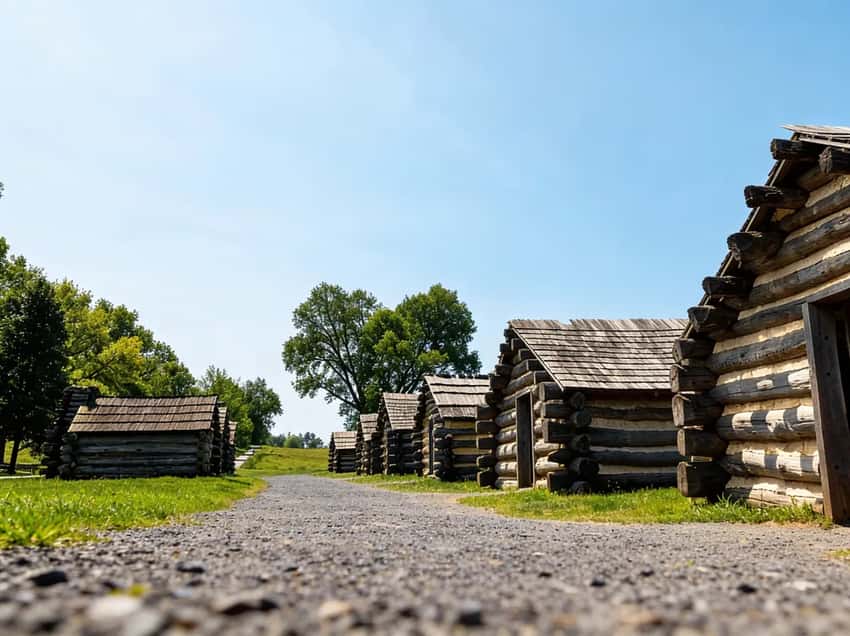
The cabins provide a stark look at the conditions soldiers endured
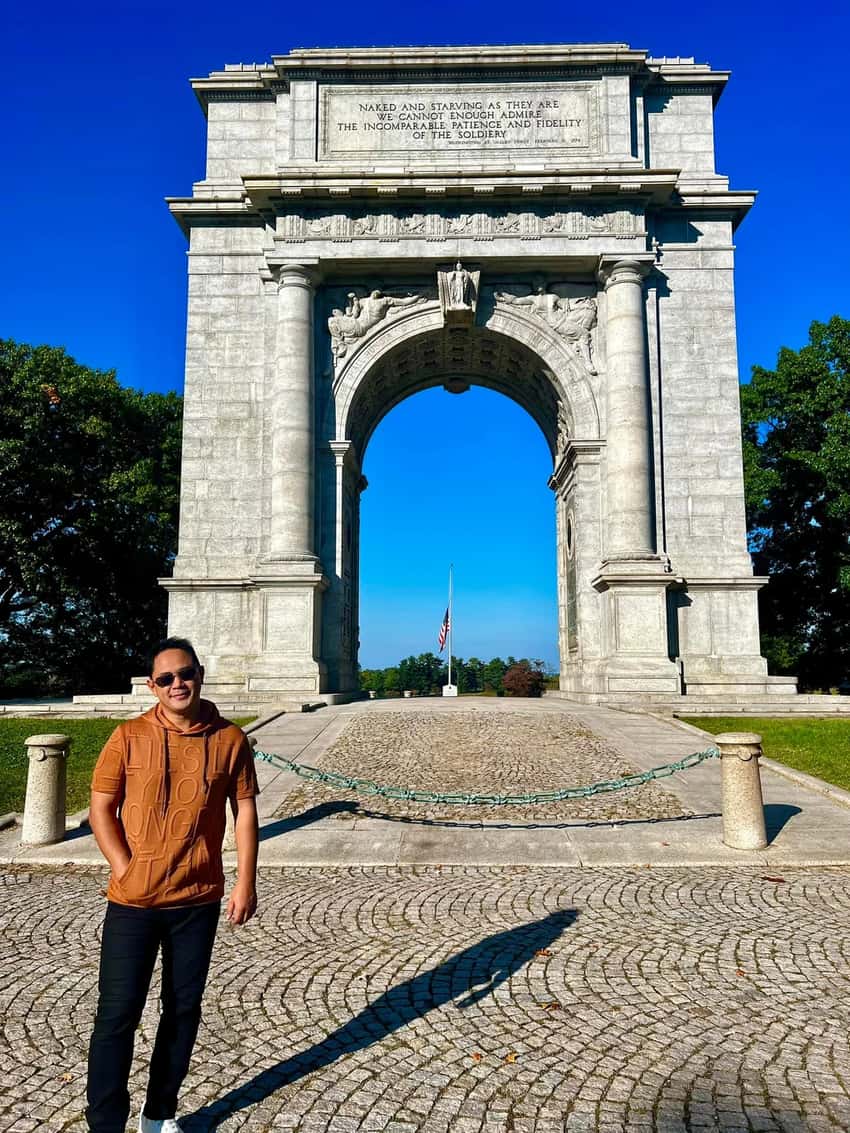
National Memorial Arch
The iconic stone arch dedicated to the soldiers who endured the winter at Valley Forge.

The National Memorial Arch honors the endurance and resilience of the Continental Army
How to Visit
Drive the Auto Tour
There’s a self-guided auto tour route (Encampment Tour Route) that hits all the major sites. Takes 2-3 hours with stops.
Take the Trolley
Seasonal trolley tours (spring-fall) run from the Visitor Center. 90 minutes, ~$22/adult. Stops at Muhlenberg’s Brigade and Washington’s Headquarters. Reservations recommended.
Rent a Bike
The Encampment Store (at the Visitor Center) rents bikes. ~$35 for 2 hours (mountain/comfort bikes), ~$45 for e-bikes. Season: April-October.
What You Need to Know Before You Go
It’s Free
No entrance fee. No parking fee. This is one of the few National Park Service sites with completely free access.
Weekend Mornings Are Packed
The JPM Trail is a popular local fitness loop. If you want to avoid crowds, go early (before 8 AM) or late (after 4 PM).
Yellow Springs Road Is Quieter
The Visitor Center area is the busiest. For a quieter experience, park at Yellow Springs Road and explore Mount Misery.
Dogs Are Allowed
Dogs are welcome on leash.
Insider Tips
Timing Strategy for JPM Trail: Arrive before 8 AM on weekends for a quiet experience. After 10 AM, it’s packed with fitness enthusiasts and families. Weekday mornings are ideal. Early evening (after 5 PM) is quieter than mid-day.
Yellow Springs Road Secret: The quieter side of the park. Park here and do Mount Misery if you want to escape crowds. Most visitors never discover this area because it’s not advertised at the main Visitor Center.
History Depth: You’ll get more from the park if you read the plaques. The Continental Army endured brutal conditions here, 2,000+ died from disease. The context makes the monuments meaningful.
Bike Rental Decision: E-bikes make the hills much easier if you’re less fit. The JPM Trail is hilly enough that regular bikes feel tough. E-bikes add ~$20-30 but are worth it for easier pedaling.
Trolley Tour Value: The 90-minute trolley covers major sites and includes narration. It’s worth doing once, especially if you have limited time. Reservations essential in spring/fall.
Historical Sequencing: Visit Washington’s Headquarters first (short walk from Visitor Center), then drive to Muhlenberg’s Brigade log cabins, then ride/walk the JPM Trail to the National Memorial Arch. This flows chronologically and geographically.
Mount Misery/Mount Joy Parking: The Yellow Springs Road entrance is less known, so parking is easier. However, the trailhead signage is minimal. Download a trail map before visiting.
Dog-Friendly Loop: Most of the JPM Trail allows dogs on-leash. Mount Misery/Mount Joy allow dogs too. Valley Forge is surprisingly dog-friendly for a National Historical Park.
Best Time to Visit
- Spring (April-May): Mild weather, fewer crowds than summer. Wildflowers bloom. Trolley tours start running. Ideal hiking weather
- Summer (June-August): Peak season. Hot (80-90°F) and crowded, especially on weekends. Good for swimming at nearby Schuylkill if park isn’t enough
- Fall (September-October): Beautiful foliage on Mount Misery. Trolley tours still running. Cooler hiking temps. Fewer crowds than summer
- Winter (December-March): Quiet and atmospheric. The JPM Trail is open year-round. Trolley tours and bike rentals closed. Good for solitude
FAQ
Is it free? Yes. No entrance fee or parking fee.
Can you drive through? Yes. There’s a self-guided auto tour route.
Are dogs allowed? Yes, on leash.
How long does it take? 2-3 hours for a basic visit (drive the loop + Visitor Center). Longer if you hike or bike the JPM Trail.
Explore More
Nearby History & Hiking Spots:
- Delaware Water Gap National Recreation Area (60 minutes): Larger park with more serious hiking and river recreation. Similar gorge geology
- Hawk Mountain Sanctuary (60 minutes): Raptor migration and overlook hiking in the Lehigh Valley
- Schuylkill River Trail: Multi-day biking trail passing through the Philadelphia area. Extends from Valley Forge region
Regional Guides:
- Full Lehigh Valley region guide for more hiking and outdoor recreation
- PA State Parks complete list for other Revolutionary War sites and historical parks
Similar Experiences:
- Independence Hall, Philadelphia: 45 minutes away. Complement Valley Forge’s outdoor experience with urban history
- Bethabara Park, Winston-Salem, NC: Similar Revolutionary War history preservation
- Morristown National Historical Park, New Jersey: Another major Continental Army winter encampment site with comparable history