Boyd Big Tree Preserve: PA Old-Growth Hemlock Trail Guide
Pennsylvania's tallest eastern hemlock stands 133 feet and has been growing for over 300 years. The free 1.8-mile loop to reach it near McConnellsburg is uncrowded, easy, and unlike anything else in South Central PA.
Boyd Big Tree Preserve protects one of Pennsylvania’s rarest ecosystems: an old-growth hemlock forest that was never logged. At the center is the Boyd Big Tree itself, a 300-year-old eastern hemlock standing 133 feet tall with a trunk nearly 14 feet in diameter.
The 1.8-mile loop to reach it is easy by any measure, but that misses the point. The walk through the grove is what changes how you think about Pennsylvania forests.
Key Takeaways
- Navigation: Use the primary gravel lot at the Hemlock Natural Area (Google Maps | Apple Maps). GPS: 40.6181, -77.4561.
- The Main Attraction: See the 300-year-old eastern hemlock, 133 feet tall and nearly 14 feet in diameter, one of the largest in Pennsylvania.
- Hike Experience: An easy 1.8-mile loop through a rare, unlogged hemlock ecosystem with a quiet “cathedral” atmosphere.
- Facilities: This is a primitive preserve with no restrooms or water; bring your own supply and plan ahead.
Getting There and Parking
Boyd Big Tree Preserve sits off PA-274 near McConnellsburg in South Central PA, within Tuscarora State Forest in Perry County.
The preserve is maintained by the Native Plant Society of Pennsylvania, which means it operates without the infrastructure of a state park: no signs on the highway, no ranger station, nothing to announce that something remarkable is a quarter mile off the road.
From Harrisburg: Head south on I-81 toward McConnellsburg, about 40 minutes. Then follow PA-274 toward the preserve. GPS coordinates: 40.6181, -77.4561.
The parking lot is a small unpaved gravel lot at the trailhead, holding eight to ten vehicles. On summer Saturdays, it is typically half full at most. This is one of the few old-growth hemlock groves in Pennsylvania that has not become a destination, which is exactly what makes it worth visiting. The lot is open dawn to dusk year-round.
No facilities. No bathrooms, no water, no bulletin board with trail maps. Bring everything you need before you arrive.
Cell service is spotty. Download a map before you leave the main road.
The Trail
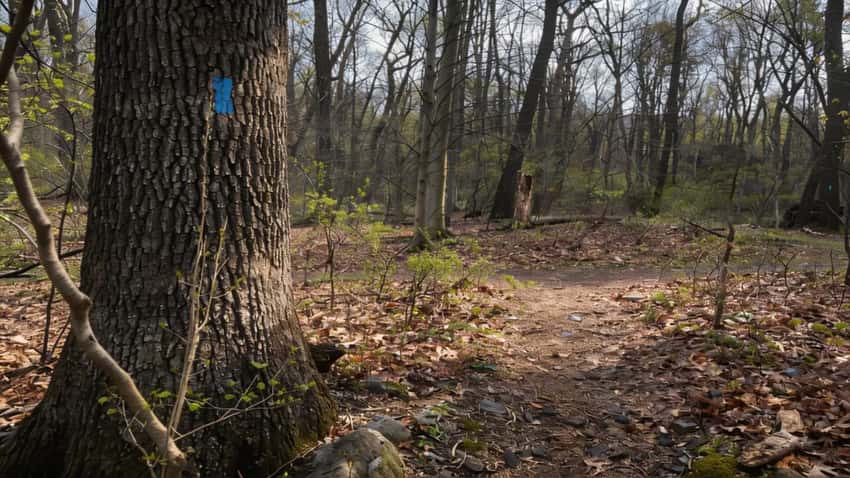
The main loop is blazed in blue paint and follows a well-maintained path through the hemlock grove. One trail, one loop, no confusing junctions.
The Walk Out, 0.5 Miles
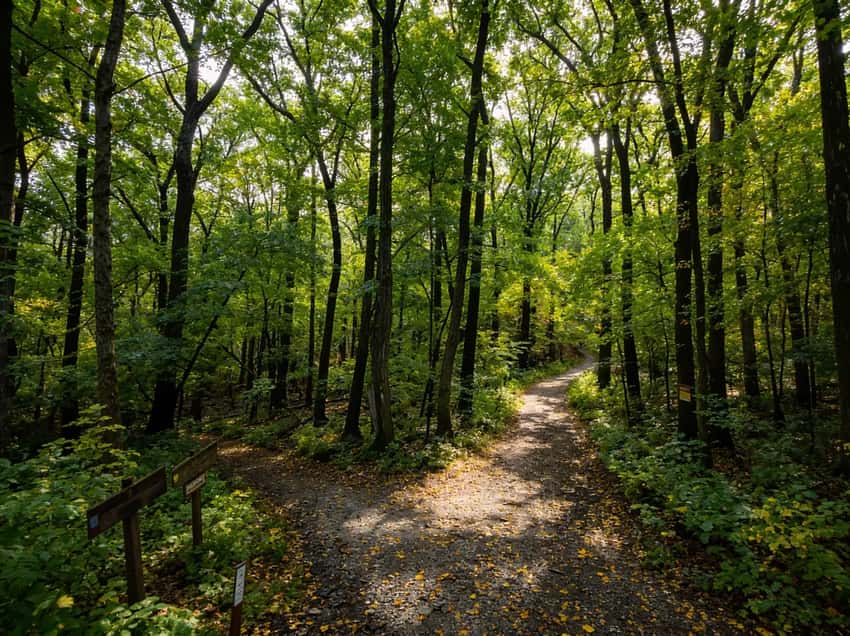
From the parking lot, the trail descends gently through a tunnel of hemlock. Many of these trees are 80 to 100 feet tall with minimal branching below canopy level. The forest closes overhead quickly, and the temperature drops noticeably even on warm days. There is a small creek audible off to the right through most of this section.
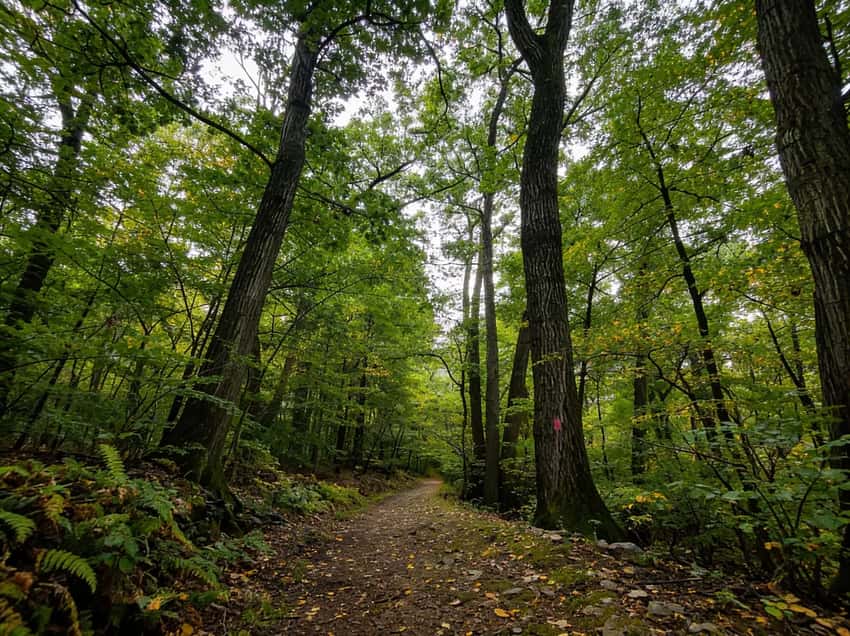
The blazes are clear. Roughly halfway to the big tree, mountain laurel begins lining the trail. Pennsylvania’s state flower blooms spectacularly here in late May and early June, pink-white clusters covering sections of the understory. If you want to time the flowers, aim for the last week of May.
The Boyd Big Tree, At 0.7 Miles
The tree is unmistakable. There is a small clearing around it, which lets you step back and actually register the scale. At 133 feet tall with a trunk nearly 14 feet in diameter, the Boyd Big Tree is the largest known eastern hemlock in Pennsylvania.
It has been alive since the early 1700s. The trunk is deeply fluted, which is typical of ancient hemlocks that have spent centuries responding to wind, water, and their own weight. The canopy above is still dense and actively growing.
Photos do not capture the scale. The clearing helps, but the tree still has to be seen in person to process. Plan to stand there for a few minutes.
The Return Loop, 0.6 Miles
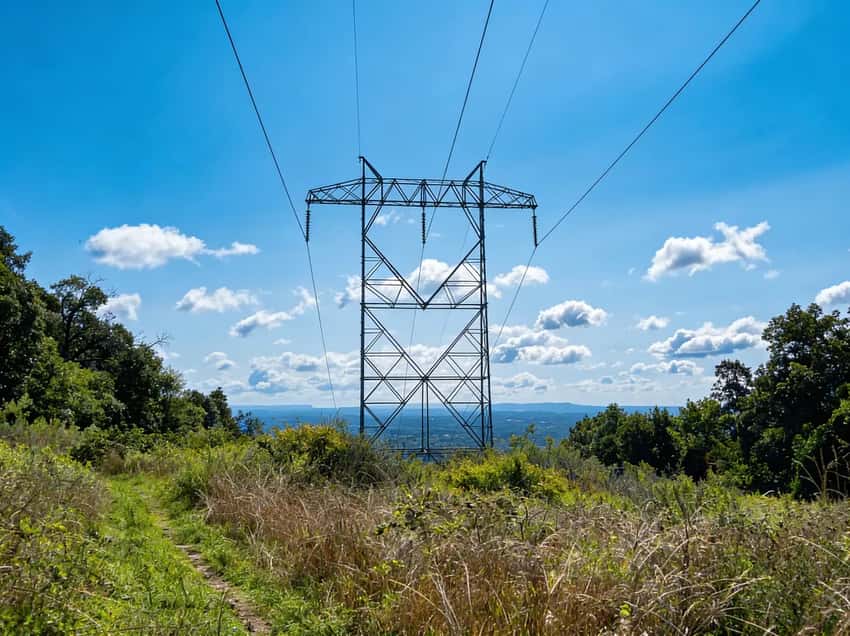
After the big tree, the trail loops back northwest through the old-growth grove. This section is slightly rockier underfoot, with scattered glacial boulders and root systems crossing the path in places.
Nothing technical. The trail widens and passes through sections of old hemlocks and some scattered white pine before rejoining the outbound trail and descending back to the parking lot. Total elevation change is about 150 feet, all of it gentle.
Seasonal Conditions
Spring (April through May): Muddy in low spots. The trail is passable but wet, especially in north-facing sections near the creek. Waterproof boots are worth it.
The mountain laurel blooms peak in late May. Bugs and ticks become active in May.
Summer (June through August): Dry and cool under the hemlock canopy, even on hot days. Mosquitoes and biting flies are active in July and August. Ticks are present through the entire warm season. Bring repellent and check thoroughly after hiking.
Fall (September through October): The best conditions of the year. Dry, cool, minimal insects. The hemlock-dominated canopy does not color like deciduous forests, so the fall display is subtle compared to a ridge-top trail.
The forest light in October is warm and gold. The quiet of this place in fall is distinct.
Winter (November through March): The trail can freeze on north-facing slopes, especially after rain. The preserve does not groom or treat the trail. Microspikes are useful if temperatures are below freezing. Most hikers skip winter here unless prepared for ice.
Why Old-Growth Matters Here
Most of Pennsylvania was completely stripped of its original forest by 1900. Logging operations cleared the ridges, the valleys, and nearly every accessible acre of the state’s interior. Old-growth forest, meaning trees over 150 years old that were never cut, now covers less than 1% of Pennsylvania’s land.
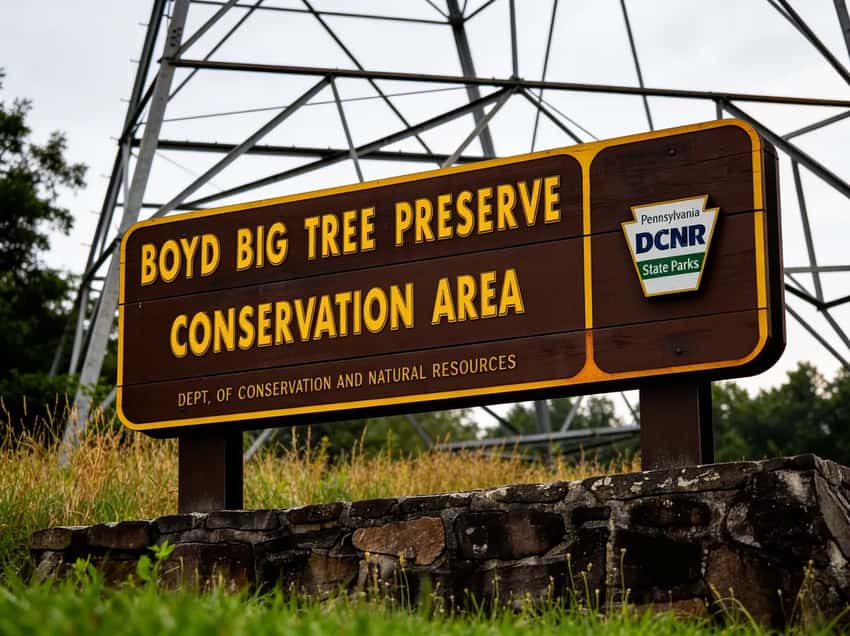
Boyd Big Tree Preserve exists because someone noticed the tree. Conservation-minded people moved to protect it, and today the entire preserve is managed as a botanical site: no commercial logging, no clearing, no development pressure. The forest is left to be a forest.
Walking through the grove, you are seeing what Penn’s Woods looked like before European settlement. The scale of the trees, the composition of species, the density of the canopy, this is comparable to what you will find at Cook Forest State Park in Clarion County, Pennsylvania’s other well-known old-growth destination.
Cook Forest is larger and more visited. Boyd Big Tree is quieter and closer to South Central PA.
The distinction matters when you understand how rare it is. There are not many places in the state where you can walk through forest that has been standing in its current form for 300 consecutive years.
Leave No Trace
The Native Plant Society maintains this preserve specifically to protect the old-growth ecosystem. The old-growth soil in places like this is fragile in ways that are not visible. Compacted root systems do not recover the way trails do. A few practical things:
- Stay on the blue-blazed trail. Off-trail walking damages the root systems of trees that have been growing for three centuries.
- Do not build cairns or move rocks. This is a protected botanical site.
- Pack out everything you bring in. There are no trash cans.
- Do not collect anything. Wildflowers, seedlings, hemlock bark, and rocks all stay where they are.
Ticks are abundant in the warmer months given the high wildlife activity in old-growth forest. Check yourself, your kids, and your dogs thoroughly when you return to the parking lot.
What to Bring
This is a short, easy hike. The packing list reflects that.
- Water, at least one liter per person. No water on trail.
- Hiking boots or sturdy trail shoes. Waterproof if hiking in spring.
- Bug repellent from May through September.
- Tick removal tool, tweezers or a tick hook. Check after hiking.
- Phone with downloaded offline map. Cell service is not reliable here.
- Rain jacket, afternoon thunderstorms are common in summer across South Central PA.
No scrambling gear, no headlamp, no technical equipment needed.
Nearby Hikes
If you are spending the day in the region, there are options within 20 to 30 minutes of the preserve.
McConnells Mill State Park, 20 minutes east. Much larger and more developed, with Slippery Rock Creek gorge, rock formations, and trail options ranging from easy creek walks to technical scrambles. A good pairing if you want more mileage after Boyd Big Tree.
Tuscarora State Forest, Perry County has extensive state forest hiking scattered through the surrounding ridges. Trails are often less marked than Boyd Big Tree’s loop. Come here once you have the main trail covered.
Duncannon area, 30 minutes north toward Harrisburg. The Appalachian Trail passes through here with access at Hawk Rock overlook, which puts you on exposed ridgeline with a completely different type of scenery from the hemlock forest.
FAQ
Can I bring my dog? Yes, on leash. Keep dogs on a short leash in the preserve. Wildlife here is less habituated to human activity than at busier parks, and the ticks are abundant in warmer months. Dogs can pick up more ticks than humans through the same stretch of trail, so check them carefully at the car.
Is there a fee? No. The preserve is free and open to the public from dawn to dusk.
How long does the hike take? 90 minutes to 2 hours for the full loop if you stop at the big tree. Faster hikers cover it in 60 minutes.
Is this good for young kids? Yes. The distance is short, the terrain is gentle, and a 133-foot ancient tree is impressive to children in a way that is hard to explain beforehand. The creek sounds and the cool, dim forest also tend to hold attention.
What is the best time of year to visit? September through October. Dry conditions, no bugs, golden light through the hemlock canopy. Late May is worth considering specifically for the mountain laurel bloom.
Boyd Big Tree is the right answer when someone asks for an easy Pennsylvania hike that does not feel generic. The trail is short. The destination is specific and irreplaceable.
Get there, stand in front of the tree, and give it time to register. Then hike back out and pair it with McConnells Mill if you want more trail before the drive home.
Planning Your Visit
Boyd Big Tree Preserve sits off a rural road in Fulton County with no cell service at the trailhead. Download an offline map before you go. The parking area is a simple gravel pull-off with room for six to eight cars. No signage marks it from the road, so rely on GPS to the coordinates in the frontmatter.
The preserve has no facilities of any kind: no restrooms, no water, no picnic tables. Pack everything in and carry it out. The trail is short enough that most visitors are self-sufficient with just a water bottle and a phone.
If you are driving specifically for this hike, combine it with Cook Forest State Park about 40 minutes north. Cook Forest holds a dense old-growth forest of its own, with towering white pines and hemlocks along the Forest Cathedral Trail. The contrast between Boyd Big Tree’s single standout specimen and Cook Forest’s cathedral grove makes for a full day of old-growth Pennsylvania. If you want to extend your travels into other natural landmarks, consult our roundup of the best waterfalls in PA or explore additional ridge hikes in our South Central PA hiking guide.
Fuel up in Chambersburg or McConnellsburg before heading out. Both are within 25 minutes of the preserve and have everything you need. There is nothing along the access road itself.