Cook Forest State Park: Forest Cathedral, Fire Tower & Old Growth Hiking
Known as Pennsylvania's 'Cathedral of Trees,' this 8,500-acre park protects the finest old-growth forest in the Northeast, featuring 300-year-old white pines, an 87-foot fire tower, and the Wild & Scenic Clarion River.
Key Takeaways
- The “Golden Window”: The first hour after sunrise (6:30-7:30 AM) is the magic window for the Forest Cathedral. You’ll get the “god rays” through the canopy and have the giants to yourself before the 9:00 AM crowds arrive.
- Loop Connection Hack: Don’t just do the Longfellow out-and-back. Connect it with portions of Tom’s Run and the Birch Trail to create a 3-mile loop that hits the best old-growth without doubling back.
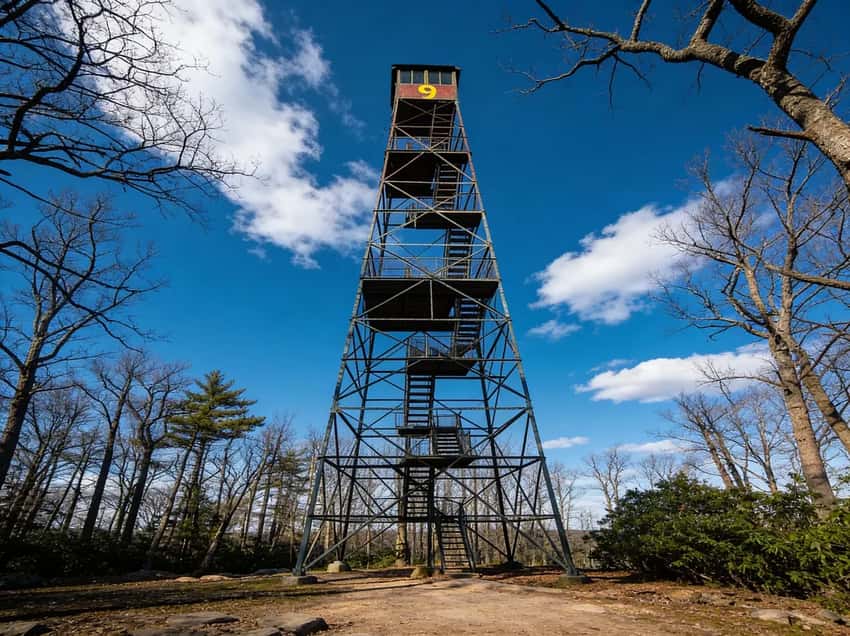
- Fire Tower Strategy: The stairs are narrow and create bottlenecks. Climb the 87-foot Fire Tower on a weekday or before 10:00 AM on weekends. If the line is long, head to Seneca Point (200 yards away) for a panoramic view with zero climbing.
- Paddling Sweet Spot: Use the Clarion River in early June. You get high enough water levels for easy floating but avoid the massive July/August tubing crowds.
- 11-Month Rule: The historic CCC River Cabins are some of the most sought-after in the state. They book up exactly 11 months in advance; set a calendar reminder if you want a summer weekend stay.
Cook Forest State Park is not just a forest. It is a cathedral. Known as the “Black Forest” for the deep, cool shadows cast by its canopy, this park is home to the finest stand of old-growth white pine and hemlock in Pennsylvania.
Some of these giants are over 300 years old and tower nearly 200 feet above the forest floor. In 1927, this became the first Pennsylvania state park created specifically to preserve a natural landmark. Today, it offers a rare chance to walk among trees that were saplings before the American Revolution.
Why Hike Cook Forest?
The undisputed star here is the Forest Cathedral, a National Natural Landmark that contains trees of mind-boggling scale. You don’t just hike through it. You feel it. The sheer size of the timber creates a sense of awe that is hard to find anywhere else on the East Coast.
But Cook Forest is also about accessible adventure. You can climb an 87-foot fire tower for panoramic views, paddle the gentle, federally designated Clarion River, or stay in historic cabins built by the Civilian Conservation Corps. It is unparalleled for families and anyone who wants big nature without grueling hikes.
The Trails: Choose Your Cook Forest Adventure
If You Want the Cathedral: Forest Cathedral / Longfellow Trail
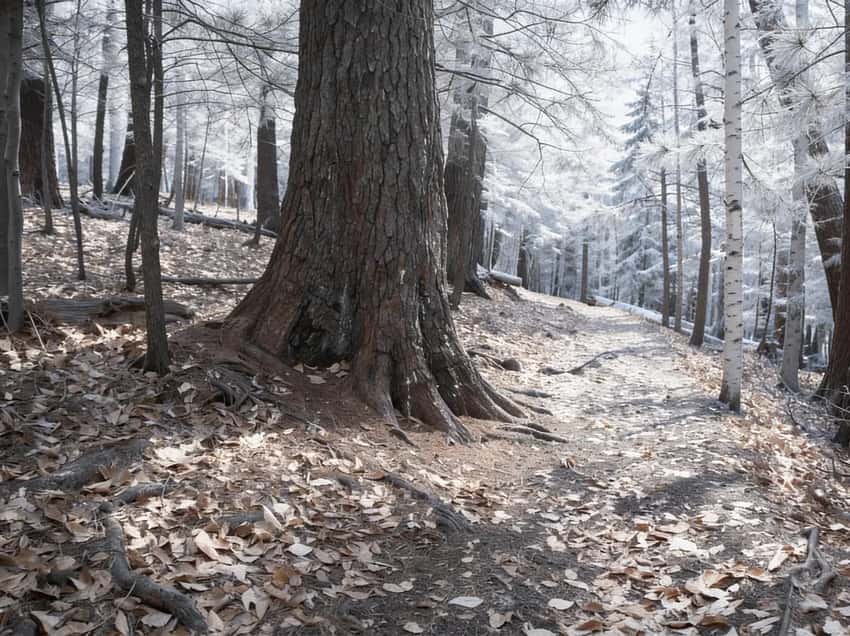
Forest Cathedral / Longfellow Trail:
- Distance: 1.2 miles loop
- Elevation: Minimal (50 ft gain)
- Time: 45 minutes to 1 hour
- Difficulty: Easy (flat, well-maintained)
- Trailhead: Forest Cathedral parking area (off PA Route 36)
- Best Time: Early morning (6:30-8:00 AM) for filtered sunlight, fall (September 25-October 10) for foliage
- The Draw: Walking among 300-year-old giants. Some hemlocks exceed 145 feet, and white pines reach nearly 200 feet
What to Expect
This is the must-do hike. The trail winds gently through the heart of the old growth. The forest floor is often quiet, cushioned by centuries of pine needles, while the canopy high above filters the sunlight into “god rays.”
- Trail Conditions: Flat, well-maintained path with occasional exposed roots. No elevation gain to speak of
- Crowds: Popular but not oppressive outside peak foliage. The 1.2-mile length means most hikers are done by 10 AM
- Immersion Factor: The canopy is so dense that you’ll feel the temperature drop 5-10 degrees compared to outside the forest. Sound also becomes muffled, a cathedral-like quiet
- Photography Reality: Early morning (6:30-8:00 AM) is essential for the “god rays” effect. Overcast days create even, shadowless light for texture photography
- Fitness Level: Truly accessible to all ages and abilities. Elderly hikers and young children do this trail routinely
Pro Tip: Go early in the morning or late in the afternoon. The low angle of the sun lighting up the massive trunks is a photographer’s dream.
If You Want the View: Fire Tower & Seneca Point
Fire Tower:
- Distance: 0.1 miles from parking
- Elevation: 87.5 ft climb (vertical)
- Time: 15-20 minutes (including climb)
- Difficulty: Easy walk, strenuous climb (87.5 feet up)
- Trailhead: Fire Tower parking area (off Fire Tower Road)
- Best Time: Fall (September 25-October 10) for foliage views, clear days for 15-20 mile visibility
- The Draw: 360-degree views stretching 15-20 miles. Built in 1929
- Warning: If you’re afraid of heights, skip the climb. The tower is safe, but it sways in the wind.
What to Expect
- The Climb: 87.5 feet vertical via metal stairs. It takes 2-3 minutes to climb. The tower does sway slightly in wind, it’s engineered and safe, but the sensation is real
- The View: On clear days, you can see 15-20 miles in all directions. The rolling Pennsylvania plateau stretches endlessly. In fall, the hardwood foliage creates a patchwork of colors
- Crowds: This is a quick stop. You’ll rarely wait, but popular weekends can see 50+ people at the base
- Fear Factor: Not recommended for people with significant height anxiety or fear of small spaces (the cab at the top is enclosed but tiny)
- Weather Reality: Wind gets stronger as you climb. In sustained winds above 15 mph, you’ll definitely feel the sway
- Photography: Bring a wide-angle lens to capture the 360-degree view. Sunrise/sunset creates warm tones. Clear days are essential, haze is common in summer
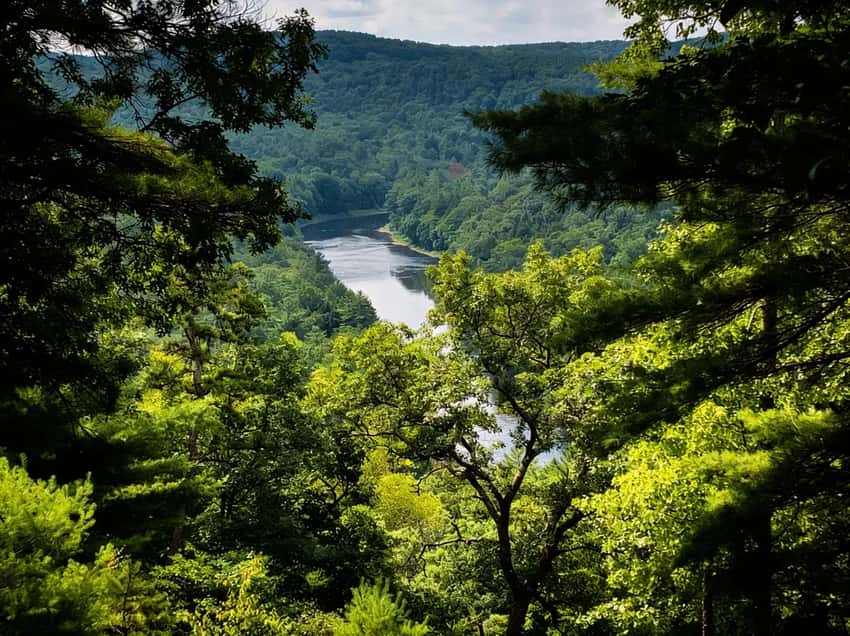
Seneca Point:
- Distance: 0.2 miles from Fire Tower parking
- Elevation: Minimal
- Time: 10 minutes
- Difficulty: Easy
- Best Time: Sunset for golden hour views of Clarion River Valley
- The Draw: A massive rock outcrop overlooking the Clarion River Valley from 1,600 ft elevation
- Bonus: Look for the “Indian mills” - bowl-shaped depressions in the rock used by indigenous peoples for grinding grain
If You Want the River: River Trail & Clarion River
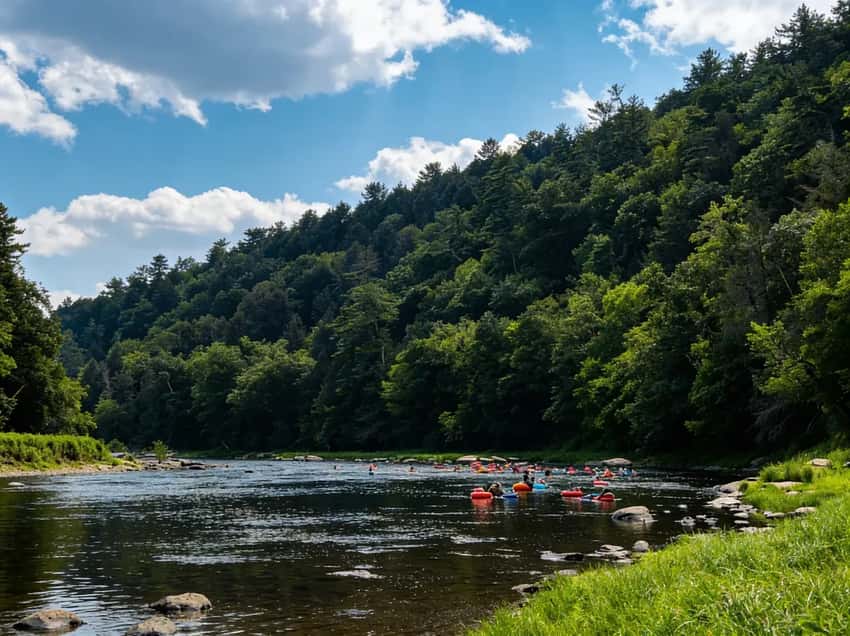
River Trail:
- Distance: Varies (runs along the river, 2-3 miles one-way)
- Elevation: Minimal
- Time: 1-2 hours
- Difficulty: Easy (flat)
- Trailhead: Multiple access points along PA Route 36
- Best Time: Spring (April-May) for high water, summer (June-August) for swimming
- The Draw: A scenic, relaxing walk along the banks of the Wild & Scenic Clarion River
What to Expect
- Trail Surface: Mostly dirt and gravel, well-maintained. Occasional roots and rocks, but nothing technical
- Scenery: The river is always in view or nearby. You’ll see river wildlife (deer, otters, bald eagles in winter)
- Crowds: Popular but not crowded. Most day-hikers do the Forest Cathedral instead, so the River Trail is quieter
- Water Level: Spring water (April-May) runs high and fast, beautiful but intimidating. Summer water is lower and warmer
- Fitness Level: Truly easy. The flat terrain means anyone with basic walking ability can do this
Clarion River Activities: The Clarion is gentle and beginner-friendly, perfect for families.
- Paddling: Rent a canoe or kayak from Pale Whale Canoe Fleet or Cook Forest Canoe Livery. Water levels are best in April-May (high, fast, exciting). June-August is warmer but slower
- Tubing: A popular way to cool off on hot summer days. Only during warmer months (July-August)
- Swimming: There are designated areas to take a dip. Water is cold year-round even in August
If You Want Wilderness: North Country Trail
North Country Trail (NCT):
- Distance: Runs through the park (National Scenic Trail, 4,800 miles total)
- Elevation: Varies
- Time: Multi-day backpacking
- Difficulty: Moderate to strenuous
- Access: Multiple trailheads throughout park
- Best Time: Fall (September-October) for cooler temps and foliage
- The Draw: Long-distance hiking through diverse terrain
For those wanting more miles, the North Country Trail passes right through the park, connecting Cook Forest to the broader Pennsylvania Wilds.
The Forest Cathedral: Pennsylvania’s Tallest Trees
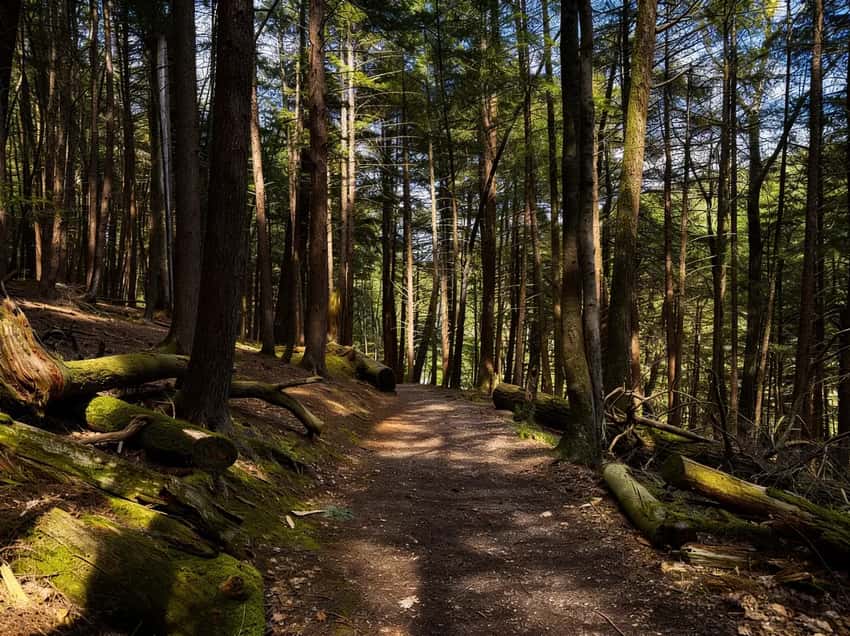
The Forest Cathedral isn’t just a name. It’s a designation. This 315-acre area is a National Natural Landmark.
The trees here - Eastern Hemlock, Eastern White Pine, White Oak, and American Beech - are survivors. They escaped the heavy logging of the 19th and early 20th centuries thanks to the Cook family, who preserved them.
- Scale: White pines here can reach 200 feet, rivaling the height of a 20-story building
- Age: Many are 300-400 years old
- Significance: One of the finest old-growth forests in the Northeast
The Fire Tower: 360-Degree Views
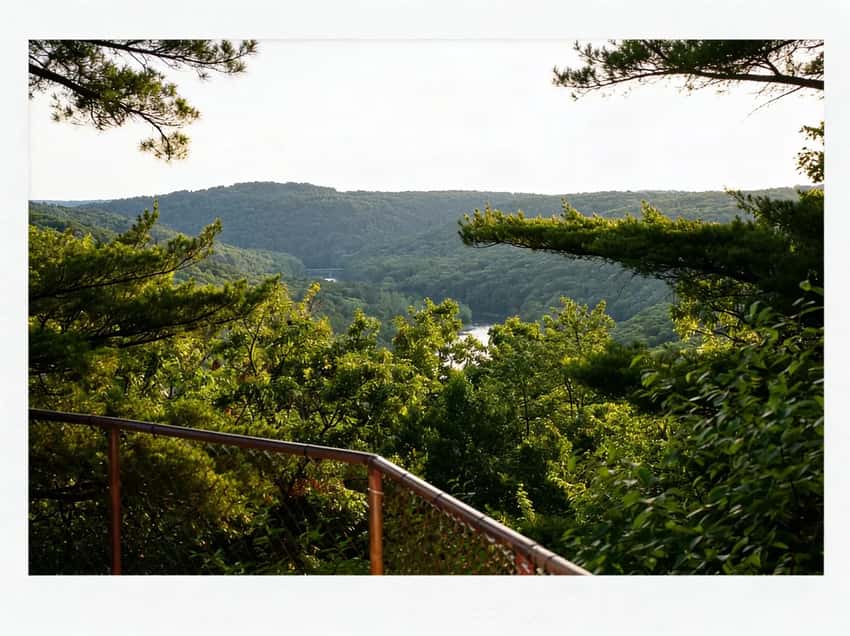
Built in 1929 by the state Bureau of Forestry, Fire Tower #9 was originally a tourist attraction before being used for fire detection. It has since returned to its roots. Climbing the open metal stairs to the top cab gives you a bird’s-eye view of the rolling plateau that characterizes this part of Pennsylvania.
On clear days, you can see 15-20 miles in every direction. The tower sways slightly in the wind - it’s perfectly safe, but not for those with vertigo.
Insider Tips
Golden Morning Window: The first hour after sunrise (6:30-7:30 AM) on any day is the best time to hike. The Forest Cathedral is nearly empty, the light is magic, and you’ll have the place to yourself. Parking fills between 8 AM-2 PM on weekends.
Skip the Fire Tower Line on Weekends: If you’re climbing the fire tower, go on a weekday or get there before 9 AM on weekends. The stairs are tight, and having a backup plan (Seneca Point, which has no climb) is smart.
Clarion River Strategy: If you’re paddling, go in April-May when water levels are high from snowmelt. The river is also busier in July-August when families vacation, so June is a sweet spot for good water levels and fewer crowds.
CCC Cabin Booking: These cabins are extremely popular and book 11 months in advance. Set a calendar reminder in January to book for the following year. Summer is nearly impossible to get. Consider visiting in spring or fall for easier availability.
Combine with Clear Creek: If you have a full day, paddle the Clarion River from Cook Forest down to Clear Creek State Park (10 miles, 3-4 hours). Arrange shuttles ahead of time with local liveries.
Winter Cross-Country Skiing: The Forest Cathedral trails are not groomed but are reliably open. Fresh snow makes the old-growth forest especially magical. Cross-country skis work better than snowshoes on the packed trail.
Photography Tips
Best Forest Cathedral Photography: Early morning (6:30-8:00 AM) for “god rays” filtering through the canopy. Wide-angle lens (16-35mm) captures the towering scale. Shoot in spring (April-May) for wildflowers on forest floor. Cloudy days eliminate harsh shadows.
Best Fire Tower Photography: Shoot from below with wide-angle lens to emphasize height. Climb for 360-degree panoramas. Fall (September 25-October 10) offers best foliage views. Sunrise or sunset creates warm light on the metal structure.
Best River Photography: Clarion River in early morning or late afternoon for soft light. Slow shutter speed (1-2 seconds) creates silky water effect. Include canoes/kayaks for scale. Spring high water (April-May) shows the river’s power best.
Best Winter Photography: Forest Cathedral after fresh snowfall (December-February). Cross-country ski tracks add foreground interest. Shoot in overcast light to avoid harsh shadows. Icicles on waterside branches create detail shots.
The Clarion River: Wild & Scenic
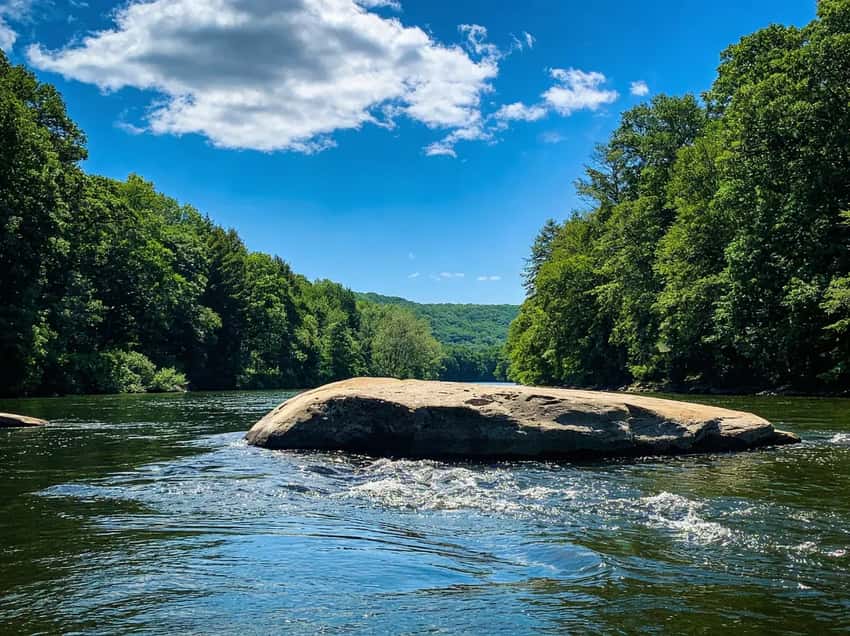
The Clarion River was once heavily polluted by industry but has made a remarkable recovery. Today, it is a designated Wild & Scenic River, teeming with bald eagles, otters, and fish. Its gentle current makes it one of the best paddling rivers in the state for beginners.
The 10-mile stretch from Cook Forest to Clear Creek State Park is particularly scenic and popular for half-day or full-day canoe trips.
Camping at Cook Forest
Ridge Campground
Located on a wooded ridge, this campground offers 210 sites for tents and trailers.
- Sites: 81 with electric hookups, 129 without
- Pricing: $19-$28/night
- Season: Mid-April to mid-October
- Amenities: Pet-friendly sites available, modern restrooms, showers
- Booking: Reserve via PA State Parks reservations
Cabins
Cook Forest is famous for its cabins.
- River Cabins: Historic, CCC-built cabins located right along the Clarion River. $60-$120/night.
- Indian Cabins: Smaller, rustic cabins perched on the hillside. $50-$90/night.
- Booking: Reserve 11 months in advance via PA State Parks reservations
Note: These book up months in advance, especially in summer. Plan ahead.
What You Need to Know Before You Go
Nearby Hubs
- Cooksburg: The main “town” (population ~250). Mostly just the park and river outfitters. Cook Forest Conservancy visitor center.
- Clarion: University town 20 minutes south. Full services, gas, groceries, restaurants.
- Leeper: 10 minutes from park. Famous for Vowinckel Hotel (legendary portions and history).
The Cook Family Legacy
John Cook settled here in 1826 to build a timber empire. But grand-nephew Anthony Wayne Cook recognized the unique value of the surviving old growth. The family fought to preserve the “Forest Cathedral” rather than log it, leading to the state purchasing the land in 1927.
This was the first Pennsylvania state park created specifically to preserve a natural landmark - a groundbreaking conservation decision.
CCC Legacy
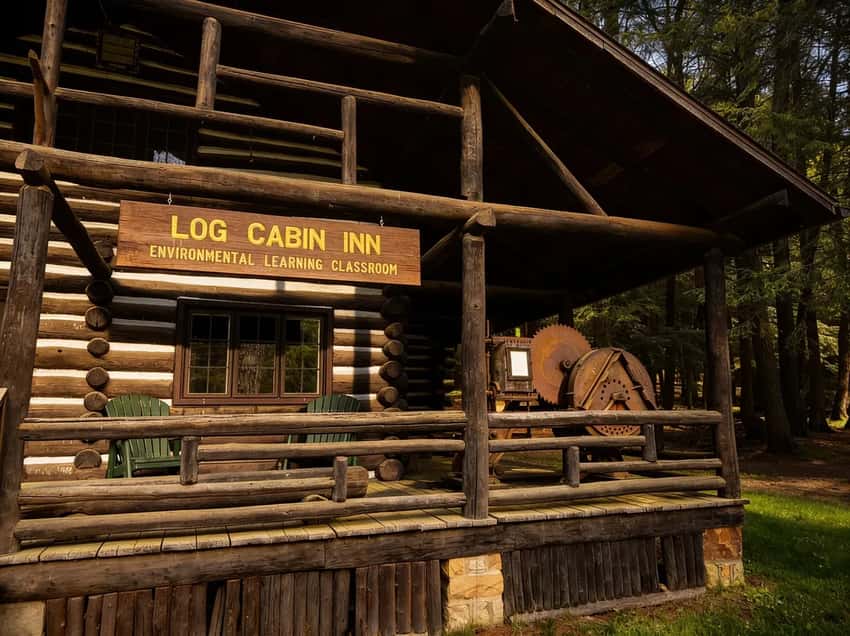
During the Great Depression, the Civilian Conservation Corps (CCC) transformed the park. They built trails, picnic pavilions, and many of the log cabins you can stay in today.
Winter Activities
Don’t write off Cook Forest in winter.
- Cross-Country Skiing: Gliding through the silent, snow-covered Forest Cathedral is a magical experience. Trails are not groomed but well-marked.
- Snowshoeing: All trails remain open for snowshoeing
- Ice Skating: There is a skating pond near the River Cabins (weather permitting)
Nearby Attractions
- Sawmill Center for the Arts: Located in the park, featuring local crafts and theater performances
- Clear Creek State Park: 10 miles downriver (connected by Clarion River). Great for extended paddling trips.
Best Time to Visit
- Spring (April-May): Wildflowers like trillium bloom on the forest floor before the canopy leafs out. River is high from snowmelt. Best dates: April 15-May 15 for wildflowers.
- Summer (June-August): The river is the place to be. It gets busy, but the cool forest offers relief. Best dates: June-July before peak heat.
- Fall (September-October): Spectacular foliage. The hardwoods turn vibrant colors against the deep green of the pines and hemlocks. Best dates: September 25-October 10 for peak color.
- Winter (December-March): Peace and quiet. Perfect for cross-country skiing and cozy cabin stays.
FAQ
How tall are the trees in the Forest Cathedral?
Some hemlocks exceed 145 feet, and white pines reach nearly 200 feet. They are among the tallest trees in the Northeastern U.S.
Is the Fire Tower scary to climb?
It can be if you have vertigo. It’s perfectly safe, but at 87.5 feet, you will feel it sway in the wind.
Is the Clarion River good for beginners?
Yes. It is generally shallow and slow-moving in this section, making it ideal for families and first-time paddlers.
What’s the best hike for first-timers?
The Forest Cathedral / Longfellow Trail. It delivers maximum wow factor with minimal effort.
Explore More
Ready to walk among Pennsylvania’s tallest trees? Start with the Forest Cathedral Trail, climb the Fire Tower for panoramic views, and paddle the gentle Clarion River.
Compare to Nearby Parks:
- Hickory Run State Park (90 minutes south): Boulder Field and waterfalls in the Poconos. More dramatic geology, fewer crowds than Cook Forest
- Ricketts Glen State Park (120 minutes east): Another old-growth gem with 21 waterfalls and a scenic waterfall loop. Similar scale trees, but busier
- World’s End State Park (90 minutes east): Gorge hiking and dramatic canyon vistas. Quieter alternative with CCC cabins
Regional Guides:
- Full Allegheny National Forest region guide for vast wilderness and connected trails
- PA State Parks complete list for other old-growth and paddling opportunities across the state
Similar Experiences:
- Clear Creek State Park: 10 miles downriver from Cook Forest (connected by Clarion River paddling). Different ecosystem, quieter
- Parker Dam State Park: Another Allegheny region park with lake paddling and forest hiking