Hawk Mountain: $10, No Dogs, Best Raptor Show in PA
The world's first refuge for birds of prey. It's not free, dogs aren't allowed, and the migration is legendary. Here's your guide.
Key Takeaways
- Not a State Park: Hawk Mountain is a private, non-profit sanctuary. There is a $10 admission fee for non-members. Pennsylvania State Park passes and National Park passes are not valid here.
- Strict No-Dogs Policy: Dogs are strictly prohibited on all sanctuary trails to avoid stressing the raptors. If you have a dog, hike the Appalachian Trail (Dan’s Pulpit) just 1.5 miles east on Hawk Mountain Road instead.
- Parking Golden Window: During peak migration (September-October), the 300-space lot fills by 10:00 AM on weekends. Arrive by 8:30 AM or visit on a Tuesday/Wednesday for the best experience.
- Silhouette Trail Hack: If you have a stroller or wheelchair, use the Silhouette Trail. it is a 900-foot groomed level path that leads directly to the South Lookout and is much easier than the rocky main trail.
- River of Rocks Warning: The River of Rocks loop is a technical 4-5 hour commitment with a grueling 800-foot climb back out. Do not attempt this unless you have sturdy boots and plenty of water; it’s an ankle-breaker.
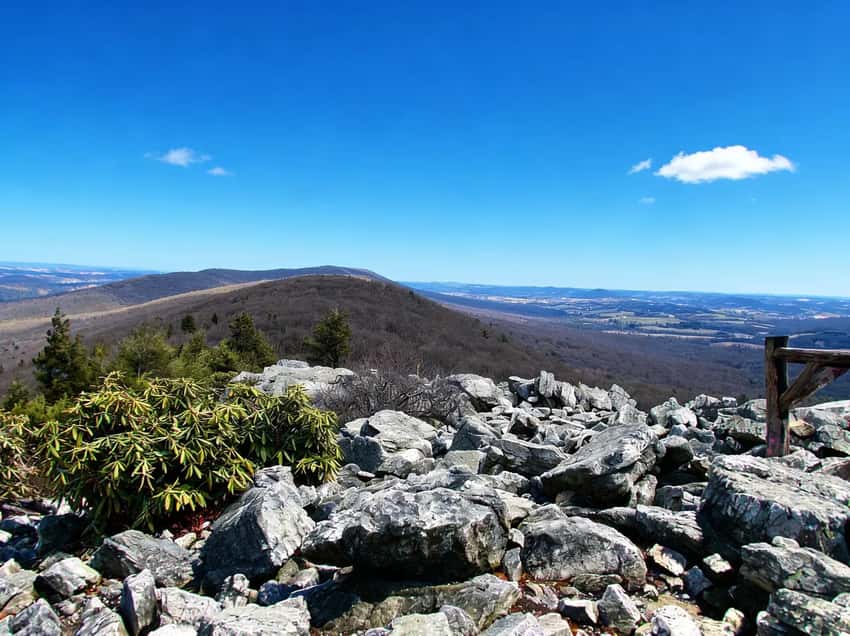
In September, the sky over Kempton turns into a highway. On a good day with a northwest wind, you can look up from the North Lookout and see a “kettle,” a swirling vortex of hundreds of broad-winged hawks riding a thermal column thousands of feet into the air. It’s one of the greatest natural spectacles in Pennsylvania.
But before you pack the car, you need to know two things that surprise almost every first-time visitor:
- It costs money. This is not a state park. It’s a private, non-profit sanctuary.
- You cannot bring your dog. Not even on a leash.
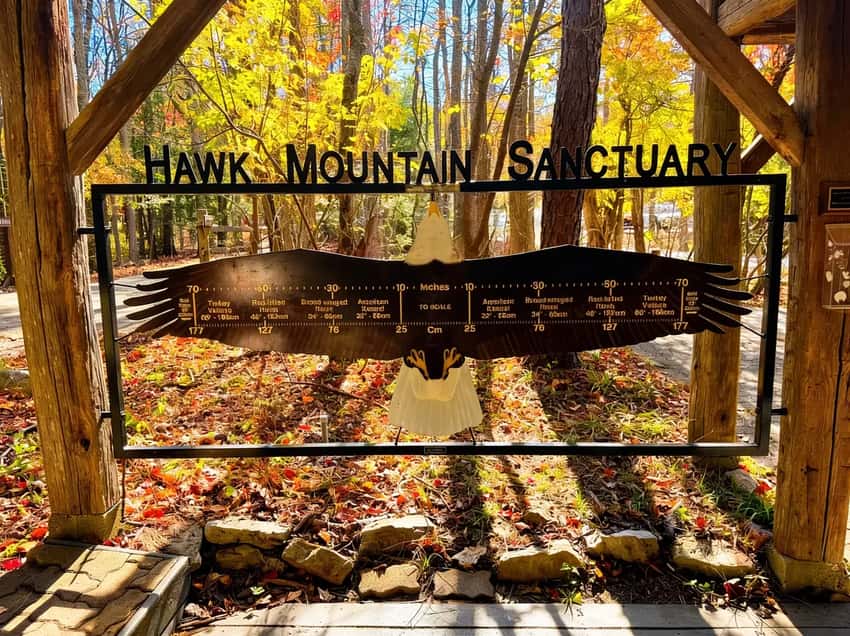
This is the world’s first refuge for birds of prey, established in 1934. The rules are strict because the mission is serious. If you keep reading, we’ll tell you how to navigate the fees, the rocks, and the migration to see the show of a lifetime.
For the latest trail conditions, maps, and closure alerts, visit the official Hawk Mountain website.
The Trails (What You’re Here to Hike)
Lookout Trail (The Main Event)
- Distance: 2 miles round trip (1 mile each way to North Lookout)
- Difficulty: Moderate to Rocky
- Blaze: Orange
- Trail Map
This is the trail everyone comes for. It connects the Visitor Center to the famous North Lookout.
What to Expect
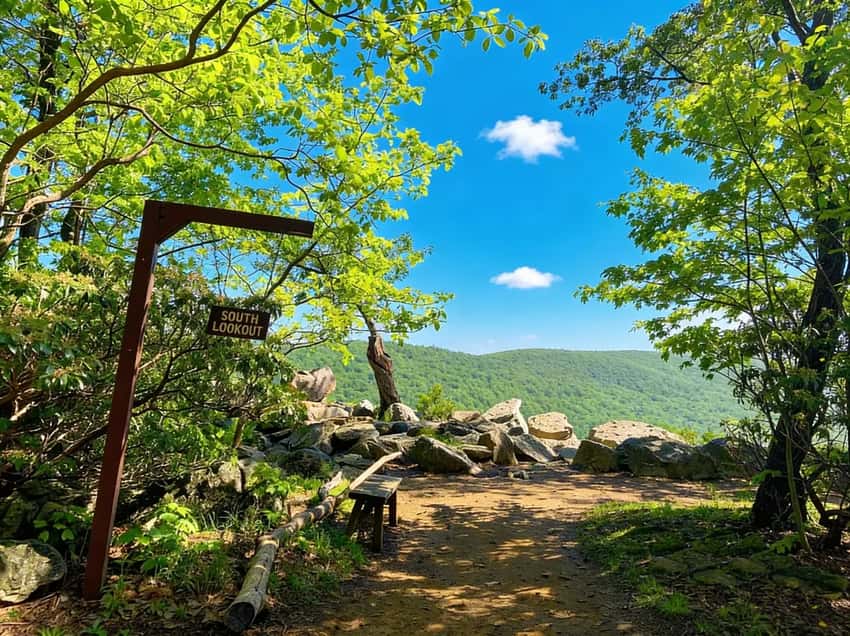
- South Lookout Section (900 feet from parking): Groomed, wide trail. Accessible for strollers and wheelchairs. Takes 10-15 minutes
- North Lookout Section (additional 1 mile): Rocky scramble with stone steps and roots. “The Slide” is a steep root-laden section that can be slippery when wet
- Crowds: Popular but manageable outside peak season. September-October weekends can be busy (30-50 hikers on the trail)
- Rock Surface: Quartzite rocks polish smooth over time. When wet or icy, they’re extremely slippery. Traction is critical
- Visibility: On clear days, you’ll see hundreds of hawks. In haze or clouds, visibility is limited to 1-2 miles. Plan for clear days if raptor viewing is your goal
- Pace: South Lookout is 15 minutes. Full trail to North Lookout is 45-60 minutes round trip for fit hikers
The first section leads to the South Lookout (900 feet from the lot). This trail is groomed, accessible, and suitable for families with strollers or wheelchairs. The view looks out toward the River of Rocks and is a great spot if you don’t want to scramble.
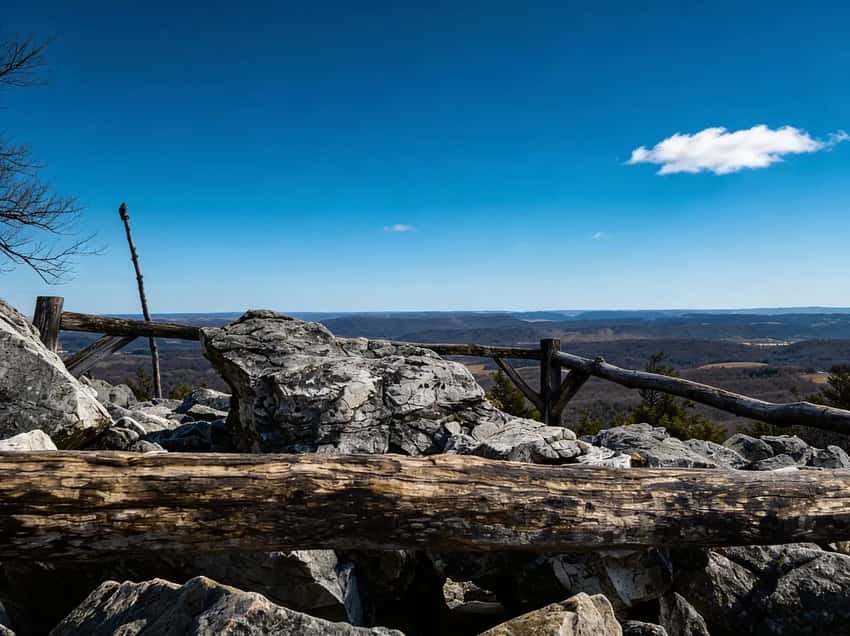
Beyond the South Lookout, the trail gets rocky. You’ll climb stone steps and navigate roots called “The Slide” before reaching the North Lookout. This is the holy grail: a massive, rocky outcrop with a 270-degree view. This is where the official counters sit, scanning the horizon from dawn until dusk.
River of Rocks Loop (The Ankle-Breaker)
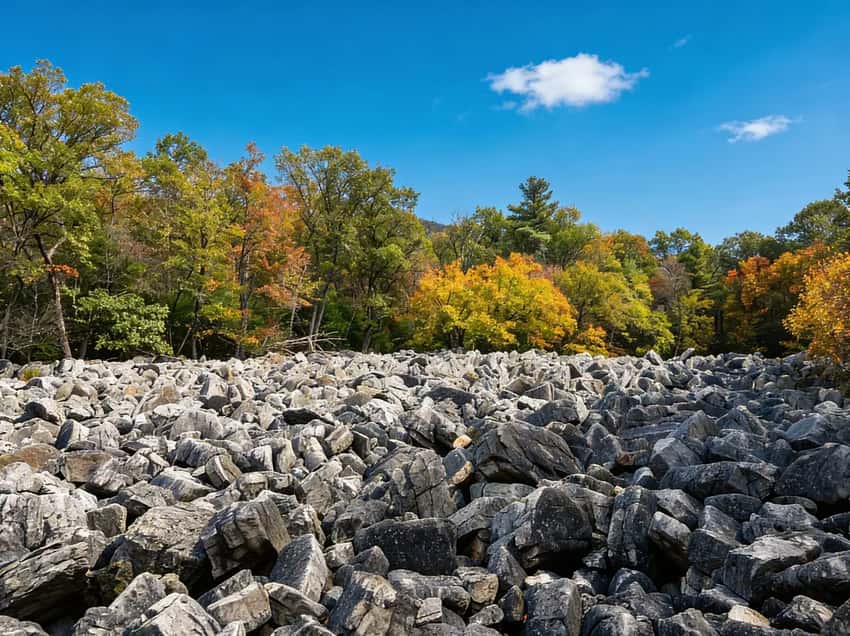
- Distance: 5.5 miles (full loop)
- Difficulty: Strenuous
- Terrain: Massive quartzite boulders
What to Expect
- Boulder Field Reality: Massive quartzite boulders (10-20 feet tall in places) with deep gaps between them. You will use your hands to scramble. This is technical terrain
- Time Reality: 5.5 miles takes 3-4 hours for fit hikers. Inexperienced scrambler should budget 4-5 hours
- Rock Surface: Quartzite is extremely slippery when wet. Wet rocks are the primary hazard here. Rain or recent wet weather makes this trail treacherous
- Ankle Risk: The gaps between boulders are deep, 5-10 feet or more in places. A twisted ankle here is serious and could require rescue assistance
- Climbing: The Golden Eagle Trail is a relentless 800-foot elevation gain in 1.5 miles. It’s steep and will tax your legs
- Fitness Requirement: This is not a hike for casual walkers. You need solid leg strength, balance, and scrambling experience
- Crowds: Rarely crowded. Most people do the Lookout Trail instead
If you want a workout, this is it. The River of Rocks is a 3,000-foot-long field of boulders left behind by the last Ice Age. Most hikers do this loop by taking the Lookout Trail to the River of Rocks Trail, descending into the valley.
⚠️ Warning: This is not a casual hike. You will use your hands to scramble. The rocks are slippery when wet, and the gaps between boulders are deep enough to break an ankle. Wear sturdy boots.
You’ll connect to the Golden Eagle Trail, a steep lung-burner that climbs back up to the Skyline Trail. From there, you hug the ridge back to the North Lookout. It’s brutal, technical, and classic “Rocksylvania.”
The Migration (Why You’re Really Here)
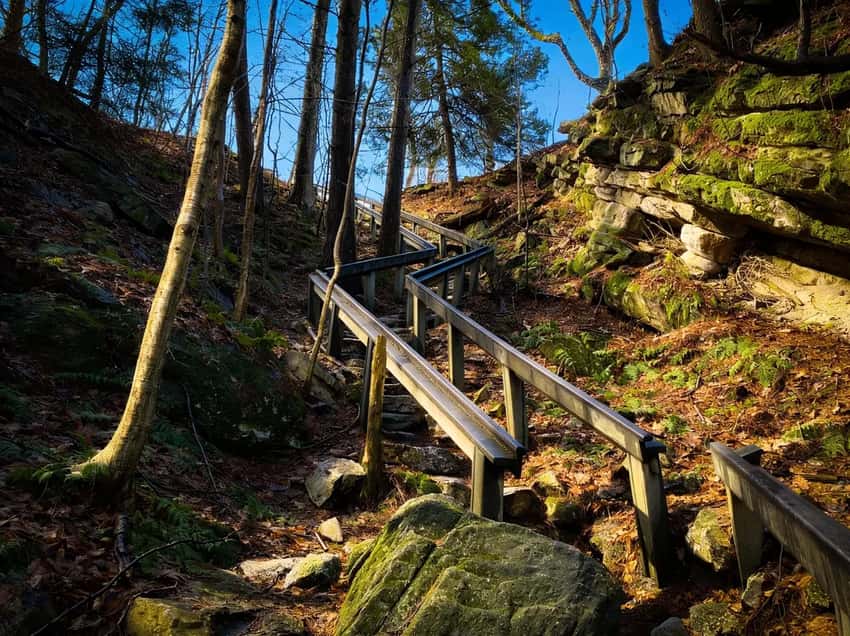
The Kittatinny Ridge creates a natural “updraft” when the wind hits it, allowing raptors to glide south toward Argentina without flapping their wings. That’s why Hawk Mountain exists.
Autumn (Mid-August to Mid-December)
- September: The peak for Broad-winged Hawks. These are the birds that form “kettles.” On a peak day in mid-September, you might see 3,000 birds in a single afternoon.
- October: Peak diversity. You’ll see Sharpshins, Cooper’s Hawks, Falcons, and Ospreys. This is the crowd favorite, especially with the fall foliage.
- November: The heavyweights arrive. Look for Golden Eagles (massive, rare in the east) and Red-tails. It’s colder, but the crowds are thinner.
Pro Tip: The birds fly best 1-2 days after a cold front passage, especially with northwest winds.
Spring (April - Mid-May)
The birds come back north, but the flight is different. They’re more dispersed. The best viewing is in late April and early May, ideally on days with south winds and cloud cover (which makes the birds easier to spot against the sky).
The History (Rosalie Edge’s Legacy)
In the early 1900s, this ridge wasn’t a sanctuary. It was a shooting gallery. Hunters would hike up to the rocks and shoot hawks by the thousands for “sport,” believing they were pests.
In 1934, a suffragette named Rosalie Edge saw photos of the slaughter. She bought the mountain, hired a warden, and stopped the guns. She founded the world’s first sanctuary for birds of prey right here. When you sit at the North Lookout, you’re sitting on history.
Logistics & Rules
Fees (It’s Not Free)
Hawk Mountain is a member-supported non-profit. The fees pay for the trail maintenance, the raptor conservation science, and the education programs.
- Adults: $10
- Seniors (65+): $7
- Children (6-12): $5
- Under 6: Free
- Members: Free admission
Purchase trail passes online or at the Visitor Center.
NO PETS (Strictly Enforced)
We cannot emphasize this enough: No dogs are allowed on sanctuary trails. Not even in a backpack. The presence of predators (even cute ones) stresses the raptors and wildlife.
Need a dog-friendly hike? Go 1.5 miles east down Hawk Mountain Road to the Appalachian Trail (Dan’s Pulpit). Dogs are allowed there.
Parking
The lot holds about 300 cars. In September and October, especially on weekends, it fills up.
“Get there early in October.” - Local advice.
If you arrive at 11 AM on a Saturday in peak foliage season, you might be turned away. Arrive by 9 AM or wait until after 3 PM.
Best Time to Visit
- September: For the sheer numbers of Broad-wings.
- October: For the variety of birds and the autumn colors. (Warning: Crowds are at their peak).
- November: For the solitude and the chance to see a Golden Eagle.
- Winter: The trails are open, but they’re not maintained. Microspikes are often necessary on the rocky sections.
⚠️ 2026 Hunting Closures: All trails closed January 10. Only Lookout Trail open January 5-9, 12-16, and 19-24. Check current closures before visiting.
Insider Tips
Peak Migration Strategy: Mid-September for broad-wing numbers. Mid-October for variety and foliage. November for solitude and the rare chance to see a Golden Eagle. October is crowded, if you want a quieter experience, come in September or November.
Parking Golden Window: Arrive by 8:30 AM on any day, or any time on weekdays. Parking fills by 10 AM on peak weekends (mid-September through October).
Binoculars Reality: The Visitor Center rents binoculars if you don’t have your own. Without them, you’ll see shapes in the sky but miss the ID details. Bring your own if you have quality optics.
Rock Hiking Preparation: If you’re attempting the River of Rocks Loop, go on a day after no rain for 48 hours. Wet quartzite is dangerously slippery. Sturdy boots with good grip are non-negotiable. Trekking poles help prevent ankle twists in the boulder field.
Bird Identification Help: Volunteer raptor identifiers are stationed at the North Lookout during migration season. They’ll tell you what you’re looking at and help you learn field marks. This is the best education you can get.
Visiting Off-Season: Winter (December-February) is quiet and peaceful. Trails are open but not maintained. Microspikes are often necessary on rocky sections. You might see Golden Eagles at the North Lookout, but the crowd experience is completely different.
Dog Alternative: Can’t bring your dog to Hawk Mountain? Drive 1.5 miles down Hawk Mountain Road and hike the Appalachian Trail at Dan’s Pulpit. Dogs are allowed, and the views are similar.
Safety & Warnings
- Binoculars are Essential: The birds can be high. You’ll be disappointed without them. The Visitor Center rents them if you don’t have a pair.
- Rocks are Slippery: The quartzite rocks on the North Lookout polish smooth over time. When wet, they’re like ice.
- Carry Water: There’s no water on the trails. Fill up at the Visitor Center.
FAQ
Is it free? No. Admission is $10 for adults.
Can I bring my dog? No. Service animals only.
What’s the best month? Mid-September for numbers, mid-October for variety.
Do I need to be a birder? No. There are volunteers at the lookout who will point things out and tell you what you’re looking at.
Is it kid-friendly? Yes. The South Lookout is easy to reach. The North Lookout has some drop-offs, so keep close watch on little ones.
Explore More
Nearby Raptor & Hiking Spots:
- The Pinnacle Trail (15 minutes south): Free, dog-friendly, similar ridge views without the $10 fee. No raptor watching infrastructure, but solitude is worth it
- Hickory Run State Park (45 minutes): Boulder Field and waterfall hikes in the Poconos. Different geology, great for a two-park weekend
Regional Guides:
- Full Lehigh Valley region guide for more hiking and outdoor activities
- PA State Parks complete list for other birding and hiking destinations
Similar Experiences:
- Chimney Rocks State Park (60 minutes north): Another ridge with raptor migration views, less crowded, no admission fee
- Hawk Mountain Sanctuary website: hawkmountain.org for detailed raptor identification guides and migration forecasts
What to Combine with Hawk Mountain
Hawk Mountain works well as a half-day stop on a broader Lehigh Valley itinerary. The Pinnacle Trail is 15 minutes south and covers similar ridge terrain at no cost, so you can compare the two lookout experiences in a single afternoon. The Pinnacle is longer and more demanding, which makes it a natural follow-up for hikers who want more mileage after the Lookout Trail.
If you are making a weekend of it, Delaware Water Gap is about 45 minutes east and offers a completely different style of ridge hiking, with gorge views and waterfall access along the Appalachian Trail. The contrast between Hawk Mountain’s birding-focused experience and Delaware Water Gap’s wilderness feel rounds out a strong two-day loop through eastern Pennsylvania’s best ridge country.
September and October visitors planning a full day should arrive at Hawk Mountain by 8:30 AM, hike the Lookout Trail first while legs are fresh, spend midday at the North Lookout watching the migration, and then drive the 15 minutes to the Pinnacle for the late-afternoon views. That sequence uses the day well and lets the crowd timing work in your favor at both sites.