Hickory Run Boulder Field: How to Visit Pennsylvania's Ice Age Fossil
16.5 acres of ancient boulders, rattlesnakes sunbathing on hot stone, and ankle gaps that eat phones. Here's how to visit the Boulder Field the right way.
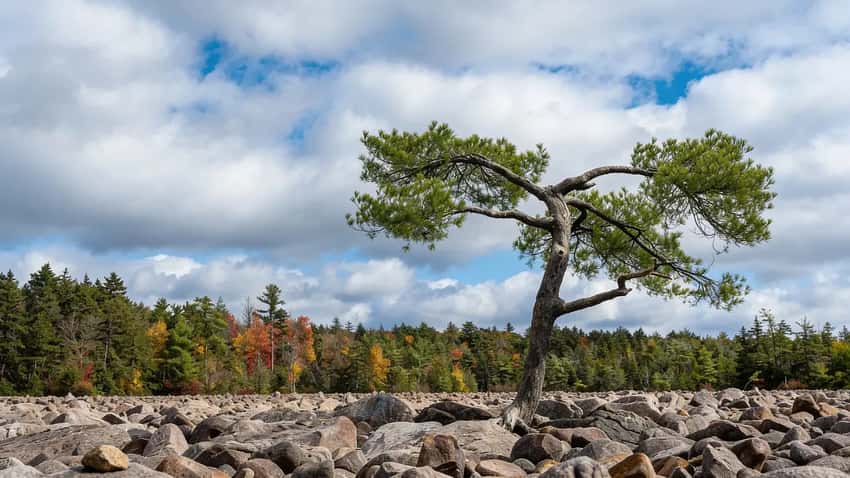
The Hickory Run Boulder Field looks like a river of rock that stopped mid-flow and froze. It is 16.5 acres of red sandstone.
Some boulders are 26 feet long. The field is piled twelve feet deep in the center. It stretches 400 feet wide and 1,800 feet long across a flat valley.
The National Park Service designated it a National Natural Landmark in 1967. Geologists estimate it has looked like this for 20,000 years.
Key Takeaways
- Navigation: Drive the 5-mile gravel Boulder Field Road (Google Maps | Apple Maps) directly to the field. GPS: 41.0503, -75.7486. The road is closed in winter.
- Geology: A 16.5-acre National Natural Landmark formed 20,000 years ago by periglacial “frost wedging.”
- Safety Caution: Rocks are unstable and contain deep “ankle-eating” gaps. Watch for Timber Rattlesnakes sunning on the stones.
- Access Choice: Use the road for direct access, or hike the 7-mile round-trip Boulder Field Trail for a full day.
Most people drive in via the dirt road. They walk onto the boulders, take a few photos, and leave. This is a reasonable approach.
But the field is more demanding than it looks. The geology behind it is fascinating. This guide will help you visit without a twisted ankle, a lost phone, or a rattlesnake encounter.
How the Boulder Field Formed
The boulders are not here because a glacier dropped them. That is a common myth. The glacier itself stopped about a mile to the north.
Conditions just south of the glacier’s edge created the field. Frozen tundra and permafrost led to relentless freeze-thaw cycles. This worked on the bedrock ridges over thousands of years.
Here is what actually happened, in order:
- Frost wedging: Repeated freeze-thaw cycles cracked the Catskill Formation bedrock along existing fault lines, breaking it into jagged angular blocks.
- Gelifluction: During summer thaws, the blocks slowly slid downhill on a layer of saturated permafrost mud, accumulating in the low valley below.
- Rounding: As the blocks ground against each other during transit, sharp edges were worn smooth and corners were rounded off.
The result is a field of red sandstone that has sat undisturbed since the Ice Age ended. The climatic processes that created this field no longer exist in Pennsylvania.
Geologists call it a relict periglacial landform. It is a fossil landscape from a climate that no longer occurs here.
This is why the National Park Service protects it as a National Natural Landmark. It is one of the largest and best-preserved boulder fields in the entire Appalachian region.
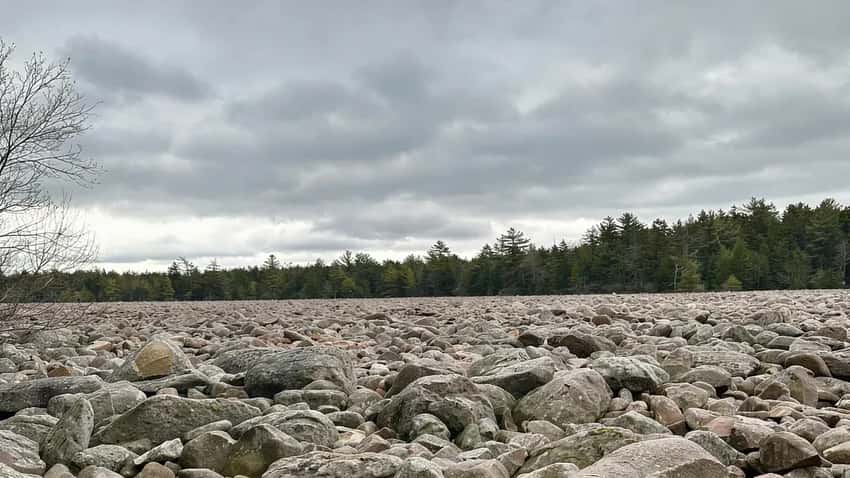
The Boulder Field stretches 400 feet wide by 1,800 feet long. The boulders are 10-12 feet deep at the center.
Getting There: Drive vs. Hike
You have two options. Most people drive. Hikers who arrive by trail will likely have the place to themselves on weekday mornings.
Option 1: Drive In (Easy Access, Seasonal)
A 5-mile one-way dirt road branches off Sand Spring Road and leads directly to a large parking area with restrooms and a picnic area adjacent to the field. From the lot, the boulder field is steps away.
The dirt road closes in winter due to ice and snow. The lot fills quickly on summer weekends. Arrive before 10 AM or after 3 PM on busy days.
Best for: families, photographers with heavy gear, anyone who wants easy access to the field.
Option 2: Hike the Boulder Field Trail (Moderate, 7 Miles Round-Trip)
The Boulder Field Trail is a 3.5-mile hike one-way from the trailhead on SR 534. The terrain is rocky and uneven. It is similar to many Pocono State Forest trails before opening onto the field.
Hikers who come this way typically arrive before the drive-in crowd. They also leave before the midday heat builds over the exposed rock. In summer, timing is everything.
Best for: hikers wanting a workout, solitude before the crowds arrive, a fuller day in Hickory Run.
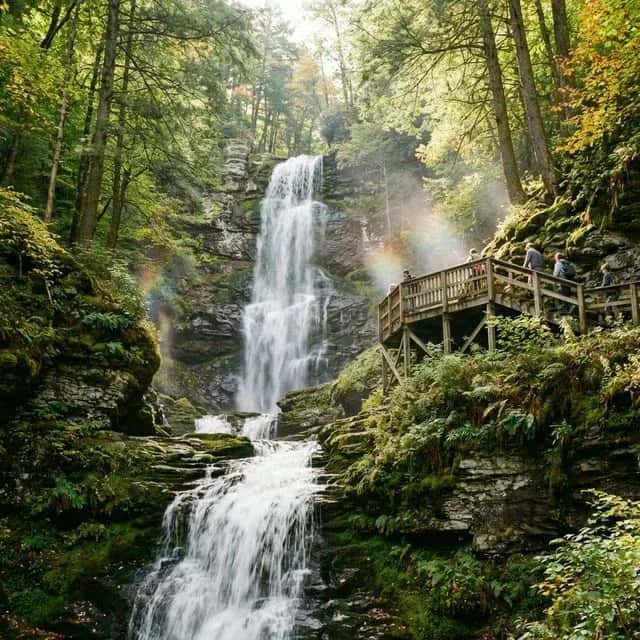
Boulders are piled 10-12 feet deep. The gaps between them swallow phones and keys permanently.
Walking on the Field
The field looks walkable from the edge. It is not. The boulders range from stepping-stone scale to car size.
They shift underfoot unexpectedly. Every step requires your full attention.
The ankle risk is real. Ankle injuries are the most common reason visitors need help at the Boulder Field. Rocks move when you step on them. One wrong placement and your ankle rolls.
Sturdy hiking boots with ankle support are not optional. Trail runners are a poor choice. Sandals are dangerous.
Phone and key issues. The gaps between boulders extend twelve feet to the bottom in the center. Items dropped into a gap are gone.
Secure everything in zippered pockets before walking on the boulders. This includes your phone, keys, and sunglasses.
Rattlesnakes. Timber rattlesnakes use the warm red sandstone for basking. They are most active from May through September. Watch where you step.
Look before placing your hands on a boulder. If you encounter one, give it space and wait for it to move.
Summer heat. There is no shade on the field. The red sandstone radiates heat. This pushes the surface temperature well above the air temperature.
Bring more water than you think you need. Apply sunscreen before you start. Plan your visit for the morning in July or August.
Kids on the field. The Boulder Field is great for older kids who can manage uneven footing. For toddlers and young children, the gaps are a serious hazard. Keep them in arm’s reach and stay close to the edge of the field.
Safety and Logistics
Parking lot timing: The drive-in lot fills on summer weekends. Arrivals before 10 AM and after 3 PM avoid the worst of the crunch.
Winter: The dirt road closes when ice makes it impassable. Call the state park before driving out in November through March.
Hunting season: Hickory Run State Park borders State Game Lands where hunting is active from October through January. If you are hiking the Boulder Field Trail during archery or rifle season, wear blaze orange.
Ticks: The wooded approach trail and surrounding forest have tick activity from April through October. Do a full check after hiking.
Leave No Trace at a National Natural Landmark
The Boulder Field is a National Natural Landmark because it has remained undisturbed for 20,000 years. Every element of the field matters to its geological integrity.
-
Do not rearrange boulders or build cairns.
-
Do not collect rocks, lichen, or any material.
-
Stay out of restricted areas. The park occasionally closes sections for management.
-
Pack out all trash. There are cans in the parking area, but none on the field.
Best Times to Visit
Spring (April through May): The road may still be closed early in the season. The field is uncrowded and the surrounding forest is green. Ticks become active in May.
Summer (June through August): Hot on the field by late morning. Go early or late. Rattlesnakes are most active during warm months.
Fall (September through October): This is the best season to visit. You get cooler temperatures and lower activity from ticks and rattlesnakes. The surrounding forest turns color around the field.
In October, the contrast between orange foliage and the gray-red boulders is spectacular. This is when the field is most photogenic.
Winter (November through March): The drive-in road closes. The Boulder Field Trail stays open for hikers who want a cold-weather visit, but check park alerts before going out.
FAQ
Can I drive to the Boulder Field? Yes, via a 5-mile dirt road off Sand Spring Road. The road closes in winter. Check the park website or call ahead from November through March.
Can I hike to the Boulder Field? Yes. The Boulder Field Trail is approximately 3.5 miles one-way from its SR 534 trailhead, making a 7-mile round-trip hike of moderate difficulty.
Is it safe to walk on the boulders? With the right footwear, yes. Sturdy hiking boots with ankle support are necessary. The rocks shift underfoot.
Ankle injuries are common among visitors who wear trail runners or sneakers. Sandals are not appropriate.
Are there rattlesnakes? Yes. Timber rattlesnakes are present in the park and use the warm boulders for basking from May through September. Watch where you step and place your hands. Give any snake you encounter space to move on.
Can I bring my dog? Yes, on a leash. The unstable, sun-heated rocks are hard on paws, especially in summer. Keep dogs near the field’s edge rather than the deeper center section.
What is the best time to visit? September and October. Cooler weather, lower tick and rattlesnake activity, and fall foliage surrounding the field. Summer visits are fine if you arrive before 10 AM.
The Boulder Field is a short visit that stay with most people. It feels ancient.
If you are spending the day in Hickory Run State Park, check out the Hawk Falls Trail. It is a one-mile walk through rhododendron tunnels to a 25-foot waterfall. For a more technical experience, the Shades of Death Trail offers a challenging boulder scramble and historic masonry dams. It’s a great second stop before heading to Lehigh Gorge State Park nearby.
If you enjoy geological scrambles and technical footwork, compare this terrain with the steep ridgeline boulder hops on the Mount Tammany Loop in the Delaware Water Gap or the legendary stone staircases at Ricketts Glen State Park.