Best Abandoned Places in PA: 8 Sites You Can Actually Visit
Stop guessing which ruins will get you a trespassing ticket. Here are 8 completely legal abandoned places in Pennsylvania. They are sorted by walk-in access, guided tours, and ticketed museums.
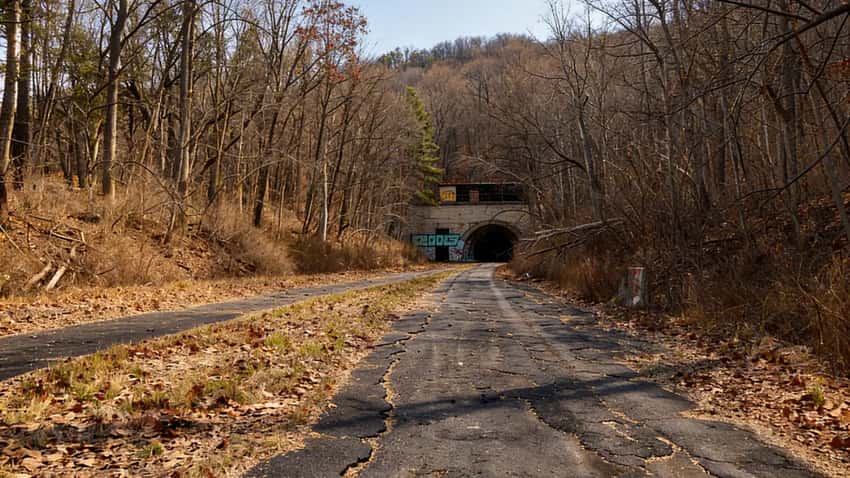
Every list of abandoned places in Pennsylvania mixes state parks, ticketed museums, active properties with security, and straight-up illegal locations into one undifferentiated scroll. Pick the wrong one without doing additional research and your day ends at a chain-link fence.
There are three categories of legally accessible ruins in PA. Sites you can walk right into. Sites that require a guided tour booking. And stabilized ruins operating as public parks or museums. Here are eight of the best, one from each end of the spectrum.
| Tier | What It Means | Sites |
|---|---|---|
| Walk-In Free | Park and start exploring. No booking needed. | Centralia, PA Turnpike, Concrete City, Coplay Kilns, Austin Dam |
| Permissioned Tours | Privately owned. Legal but requires appt or tickets. | Pennhurst State School, Yellow Dog Village |
| Guided Highlights | Managed heritage sites with structured tour groups. | Carrie Blast Furnaces |
| Ticketed Museums | Curated ruins run as public parks or paid attractions. | Kinzua Skywalk, Eastern State Penitentiary |
Walk-In Free: No Permit, No Ticket
These five locations require zero permission. The tradeoff is that they’re unstaffed. You’re responsible for your own safety on uneven ground, broken concrete, and glass.
Centralia , The Active Mine Fire Town
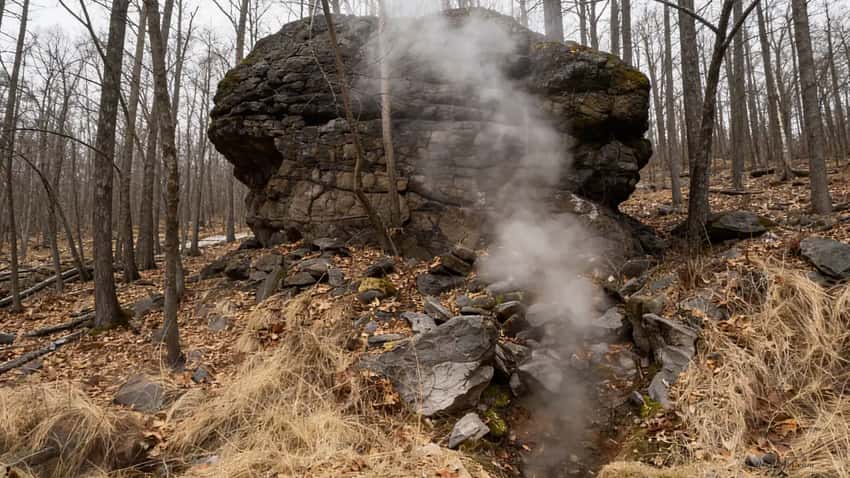
The underground fire has burned since 1962. The “Graffiti Highway” tourists came for was completely buried in 2020. What remains is still worth the trip: the St. Ignatius Cemetery on the hill, the erased street grid being swallowed by scrub, and the steam vents where the fire still breathes.
No fee, but respect the clearly marked safe zones. A few holdout residents still live there and the property lines are real.
Full guide to Centralia, what’s still accessible and where to park →
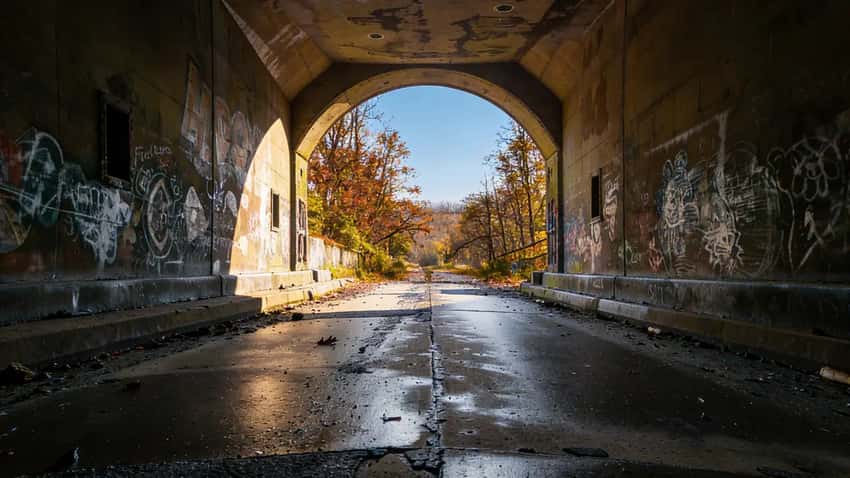
The Abandoned PA Turnpike (Pike2Bike)
13 miles of bypassed 1940s highway, including two massive unlit tunnels. Ray’s Hill Tunnel runs 3,532 feet. Light is usually visible at the other end. Sideling Hill Tunnel runs 6,782 feet with a slight curve at the midpoint. It is completely pitch black.
The critical mistake most visitors make: parking at Breezewood (the western trailhead) when they want Sideling Hill. Breezewood accesses Ray’s Hill. If you want the longer, darker tunnel, park at Oregon Road near Waterfall (eastern access, GPS 40.048683, -78.095839).
Bring a 1,000+ lumen headlamp and a patch kit if biking. The tunnel floors have decades of broken glass.
Which trailhead to pick and full tunnel logistics →
Concrete City (Nanticoke, Luzerne County)
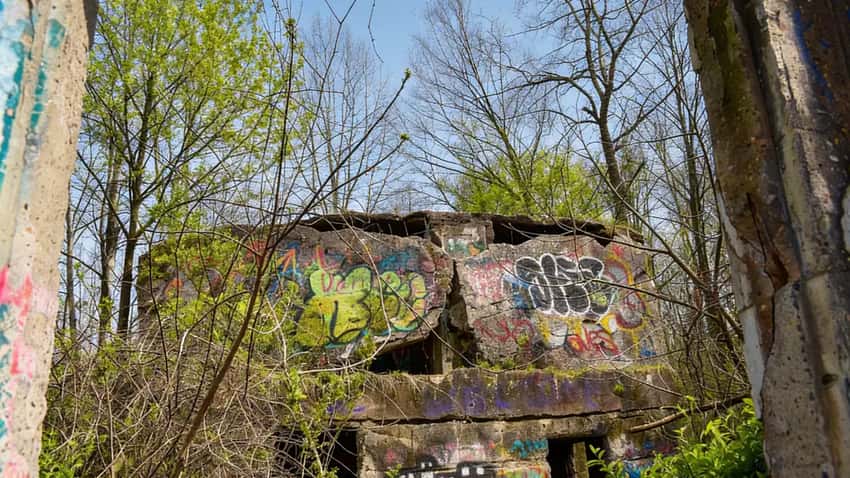
Built in 1913 as model company housing for elite colliery workers, abandoned 11 years later. The coal company refused a $200,000 estimate to retrofit plumbing into solid poured concrete. When they tried to demolish it with 100 sticks of dynamite per building, the concrete barely chipped. They gave up and walked away.
⚠️ Warning: Visit between November and April. By July, the access road is flooded with ruts, poison ivy guards the building entrances, and the summer weeds hide exposed rebar. The site essentially closes itself.
Parking GPS: 41.186939, -75.974001. Entrance is an unmarked dirt road heading north off Front Street.
Full entrance walkthrough and summer hazard details →
Coplay Cement Kilns (Lehigh County)
By 1900, the Lehigh Valley produced 72% of all the Portland cement in the United States. The most visible remnant of that era is the row of nine towering red-brick Schoefer kilns sitting in Saylor Park, Coplay. Shut down in 1904, they were obsolete within 12 years of being built.
This is the easiest ruin on the list. Address: 245 N 2nd St, Coplay, PA 18037. Free public park, open dawn to dusk, paved parking lot directly adjacent to the kilns. Interpretive signs explain the Portland cement process. No hiking required.
Austin Dam Ruins (Potter County)
On September 30, 1911, the “dam that could not break” failed. In a matter of minutes, 400 million gallons of water swept through the Freeman Run Valley, killing 78 people. It remains the second-worst flood disaster in Pennsylvania history, and the failure directly led to national dam construction reforms.
Five jagged concrete sections still stand in the valley today, exactly where they fell. The Austin Dam Memorial Park encourages public access, with hiking and rustic camping among the ruins. Route 872 north of Austin. GPS: 41.65306, -78.08556.
Permissioned & Guided , Access Requires Pre-Planning
While “walk-in” ruins offer freedom, these sites offer the most spectacular remaining architecture in the state. The catch: you must play by the owners’ rules.
Pennhurst State School (Chester County)
Once the center of a national controversy over institutional care, the Pennhurst campus in Spring City is a massive collection of red-brick structures being slowly reclaimed by nature. It is privately owned and operates legally as a museum and historical site.
You cannot “explore” Pennhurst for free. Access is granted through History Tours and Photography Tours booked via pennhurstasylum.com. These tours allow legal access to the grounds and specific buildings that are otherwise strictly off-limits.
Yellow Dog Village (Armstrong County)
Yellow Dog Village is a rare, intact “abandoned town” consisting of identical wooden company houses built for mining families. Abandoned in the 1950s, the village has become a mecca for photographers looking for an Americana time-capsule.
This is private property. To visit legally, you must contact the owners ahead of time (usually via their official Facebook page) to book a photography pass or attend an open house. Trespassing is strictly prosecuted here.
Guided Tours Only , Requires Advance Booking
Carrie Blast Furnaces (Pittsburgh)
These 92-foot iron-making stacks were part of the Homestead Steel Works, operational from 1907 to 1978. They are now a National Historic Landmark and genuinely spectacular at scale , massive rusted iron and steel against the Monongahela River valley.
You cannot walk in. Access is strictly via guided tours through the Rivers of Steel Heritage Corporation. Closed-toe shoes are mandatory. You must sign a liability waiver and they will issue a hard hat. Book ahead because tours sell out seasonally. Address: 801 Carrie Furnace Blvd, Pittsburgh.
Ticketed Museums (Stabilized Ruins)
Kinzua Bridge Skywalk (McKean County)
In 1882, the Kinzua Viaduct was the highest and longest railroad bridge in the world. It was 301 feet tall and over 2,000 feet long. An F-1 tornado took down 11 of its 20 towers in 30 seconds in 2003. Instead of clearing the debris, DCNR left the twisted steel exactly where it landed in the gorge.
The remaining standing section was converted into the Kinzua Skywalk. It is 600 feet of walkway with a glass floor directly above the collapse zone. It is a free DCNR state park with a large paved lot and visitor center. Address: 296 Viaduct Rd, Mount Jewett, PA.
💡 Note: Confirm current seasonal hours before visiting. DCNR closes the Skywalk walkway during winter icing conditions.
Eastern State Penitentiary (Philadelphia)
Opened in 1829 as the world’s first modern penitentiary and abandoned in 1971. It is now maintained under “stabilized ruin” status. The roofs are preserved but the interiors were left exactly as they were found. You can walk Al Capone’s furnished cell, peer through cell blocks where paint has been peeling for 50 years, and hear the audio tour narrated by Steve Buscemi.
This is a ticketed museum experience (~$20+) at 2027 Fairmount Ave, Philadelphia. Book tickets at easternstate.org. Not a wild walk-in, but it belongs on any PA abandoned history list.
The Hall of Demolished Ruins (Save the Trip)
Social media stays alive longer than buildings. To save you from driving hours to a flat dirt lot, here are the major landmarks that have been demolished or buried in the last decade:
- St. Nicholas Coal Breaker (Mahanoy City): Once the most iconic coal ruin in the world. It was completely demolished in 2018. The site is now a barren industrial flat.
- The Graffiti Highway (Centralia): The famous 0.7-mile section of Route 611 was completely buried under mounds of dirt in April 2020. You can no longer see the paint.
- The Frick Manor Ruins: Many old guides mention the ruins of the Frick Estate. Most of these structures have been cleared or stabilized beyond recognition.
Capturing the Decay: 5 Photography Tips for Ruins
Photographing abandoned spaces is a masterclass in handling high-contrast lighting and finding beauty in texture.
- The “Wide-Angle” Necessity: Ruins are often cramped and dark. A 14mm or 16mm lens is essential to capture the scale of a collapsing hall or a row of company houses.
- Bracket Your Exposures (HDR): The light pouring through a broken window into a dark room will blow out your sensor. Take 3-5 shots at different exposures and blend them to keep detail in both the shadows and the light.
- The “Tripod” Non-Negotiable: In unlit spaces like the Sideling Hill Tunnel or Concrete City interiors, you’ll need 2-10 second exposures. You cannot hand-hold these. A sturdy travel tripod is your most important gear.
- Find the “Macro” Story: Don’t just look for wide shots. The story of decay is in the details: a rusted iron rivet, peeling lead paint, or a vine curling through a floorboard. Use f/8 to keep these textures sharp.
- Safety First: Never set up a tripod on rotted wood. Perform a “Tug Test” on your mount before stepping back, and always wear a respirator in pre-1970s buildings to avoid inhaling asbestos/lead dust.
Planning Your First Abandoned Places Trip
The biggest mistake first-timers make is treating these sites like normal day hikes. A little homework before you leave cuts the risk of a wasted drive significantly.
Check the access status first. Land ownership changes and seasonal closures happen with no announcement. For walk-in sites, search the site name plus “closed” or “trespass” in the last six months before you go. For permissioned sites like Yellow Dog Village and Pennhurst, confirm your booking at least two weeks out. Tour operators occasionally cancel on short notice.
Understand the permit picture. None of the walk-in free sites on this list require a formal hiking permit. Austin Dam Memorial Park is managed by a non-profit association with free daytime vehicle parking right off PA-872 (no state forest vehicle permit required for day use; primitive camping requires a modest donation arranged on site). Carrie Blast Furnaces is covered by your tour ticket. Eastern State Penitentiary and Kinzua Skywalk require purchased admission. For everything else, your only obligation is to stay within marked boundaries.
Call ahead for guided sites. Rivers of Steel tours at Carrie Furnaces sell out weeks in advance during summer. Pennhurst history tours run on a limited weekend schedule. Do not show up without a confirmed booking at either location. A quick phone call or a check of the booking page the morning of your trip can save you a two-hour drive.
Build in buffer time for walk-in sites. The Sideling Hill Tunnel alone takes most people 45 minutes to an hour to walk through and back, and that assumes no stops. Concrete City is only a short walk from the parking area, but the site itself rewards slow exploration. Budget at least two hours at any walk-in ruin if you want to photograph it properly.
Tell someone your plan. Cell service is unreliable or nonexistent at Concrete City, both Turnpike tunnels, and Austin Dam. Before you go, share your intended site, your expected return time, and your vehicle description with someone who can call for help if you do not check in.
When to Visit Each Tier
Timing matters more at abandoned sites than at maintained parks. Here is how the seasons break down by access tier.
Walk-in free sites: late October through early April is ideal. Vegetation is the biggest practical obstacle at most ruins. Concrete City is the clearest example: the site explicitly closes itself in summer when the access road floods and poison ivy blocks the building entrances. The same logic applies at Austin Dam, where thick brush along Freeman Run valley trails can obscure hazards in the ground. Cool, dry weather also means fewer ticks at all five walk-in sites. The Sideling Hill Tunnel has no seasonal closure, but the tunnel floor is wet year-round and can be icy in January and February.
Permissioned tours: spring and fall for the best light and smaller crowds. Yellow Dog Village photographers report the best results in late October when the leaves frame the wooden houses without blocking the facades. Pennhurst history tours run year-round, but summer weekends book fastest because of overflow demand from the haunted attraction season nearby.
Guided tours (Carrie Furnaces): late spring through early fall, but book early. Rivers of Steel runs its most comprehensive tours from May through October. The furnaces look most dramatic on overcast days when diffused light keeps the harsh shadows off the rusted steel. Avoid holiday weekends if you want a smaller group.
Ticketed museums: check operator schedules, not seasons. The Kinzua Skywalk closes the walkway portion during winter icing, but the park itself stays open. Eastern State Penitentiary runs year-round, with special programming in October that sells out months in advance. If you are visiting Philadelphia in the fall, book Eastern State tickets in August.
Before You Go , Gear by Category
Wild/Walk-In sites (Concrete City, Turnpike, Austin Dam):
- 1,000+ lumen headlamp with backup batteries
- Stiff-soled boots (broken glass and rebar)
- Tick spray (spring through fall)
- Patch kit and pump if biking
- Offline map. Cell service is unreliable at all three locations.
- A basic first aid kit. There are no staff at any of these sites and the nearest urgent care can be 30+ minutes away.
- A respirator rated N95 or better if you plan to enter enclosed structures. Pre-1980s industrial buildings can contain asbestos dust and silica from deteriorating concrete.
Curated/Guided/Ticketed (Carrie Furnaces, Kinzua, Eastern State):
- Book advance tickets. All three require it or benefit strongly from it.
- Closed-toe shoes (Carrie Furnaces requires them, and Eastern State has uneven stone floors)
- Water
- A printed or downloaded backup of your ticket confirmation. Cell service inside Eastern State’s thick walls is limited.
Pennsylvania’s industrial past left a rich landscape of forgotten infrastructure. If you’re in South Central PA, the Abandoned Turnpike guide covers everything you need for the Bedford County tunnels, while the remote coal-mining ruins and boxcar rocks along the Stony Valley Ruins trail make for a rugged backcountry trek. In the Anthracite Coal Region and Central PA, dive into our complete guides for the mine-fire survivor town of Centralia and the poured-concrete housing monuments at Concrete City. For outdoor trips across northeastern Pennsylvania, explore our Poconos regional guide.