Hawk Falls Trail: Short, Sweet, and Slammed
1.2 miles, rhododendron tunnels, and a 25-foot waterfall. Here's the parking strategy, swimming rules, and how to beat the crowds at Hickory Run's most popular trail.
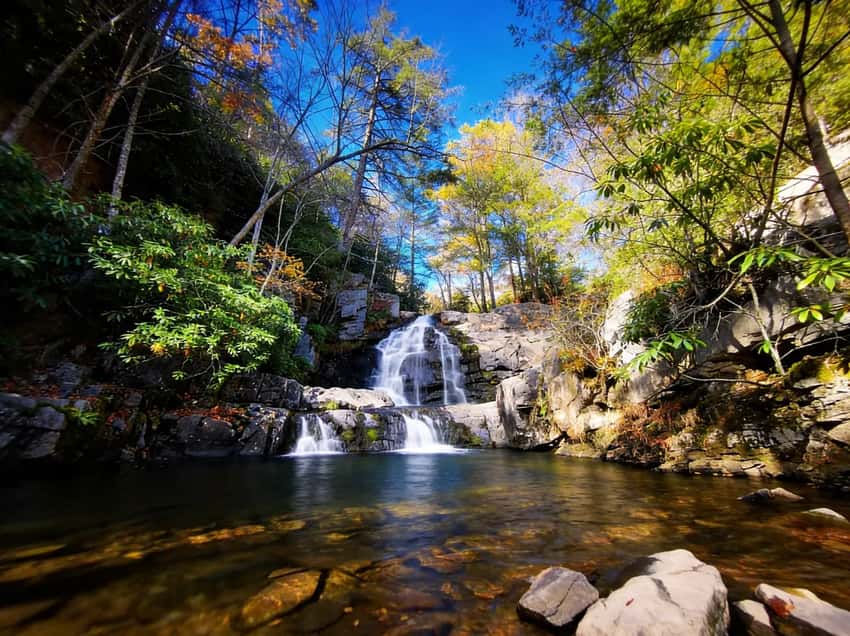
"The root-strewn descent is slippery when wet. If the falls pool is crowded, loop onto Orchard Trail along Mud Run for tranquil trout water."
Hawk Falls Trail is 1.2 miles round-trip. It takes 45 minutes. It is one of the most popular hikes in Pennsylvania. The parking lot on PA Route 534 fills by 10 AM on summer weekends, and if you arrive at 11 you are parking along the highway.
The trail descends through dense tunnels of rhododendron to a 25-foot waterfall where two streams converge. Swimming is prohibited but people wade. The uphill return is steeper than you expect for a trail this short. This is how to do Hawk Falls without the parking stress and without the crowd.
Key Takeaways
- Navigation: Use the dedicated lot on PA Route 534 (Google Maps | Apple Maps). GPS: 41.0108, -75.7562. Arrive before 10 AM on weekends.
- Visual Reward: Hike through dense rhododendron tunnels to a 25-foot waterfall that remains impressive even during dry summer stretches.
- Swimming Rules: Wading is permitted at the base of the falls, but jumping from the rocks is strictly prohibited and heavily patrolled.
- Terrain: A short 1.2-mile out-and-back with moderate rocky sections. The final descent to the falls is steep and requires sturdy footwear.
Parking, Plan This Before You Drive
The PA Route 534 Lot
The main trailhead lot sits just east of the I-476 (Pennsylvania Turnpike) overpass on PA Route 534. It holds a reasonable number of cars and costs nothing. On weekends from May through October, it fills by 10 AM. On holiday weekends and peak foliage days in October, it fills by 9 AM.
Strategy: Arrive before 9 AM or after 3 PM. There is no middle option that works on a summer Saturday.
The lot has seasonal portable toilets. For restrooms with running water, the Hickory Run State Park Visitor Center is approximately three miles away.
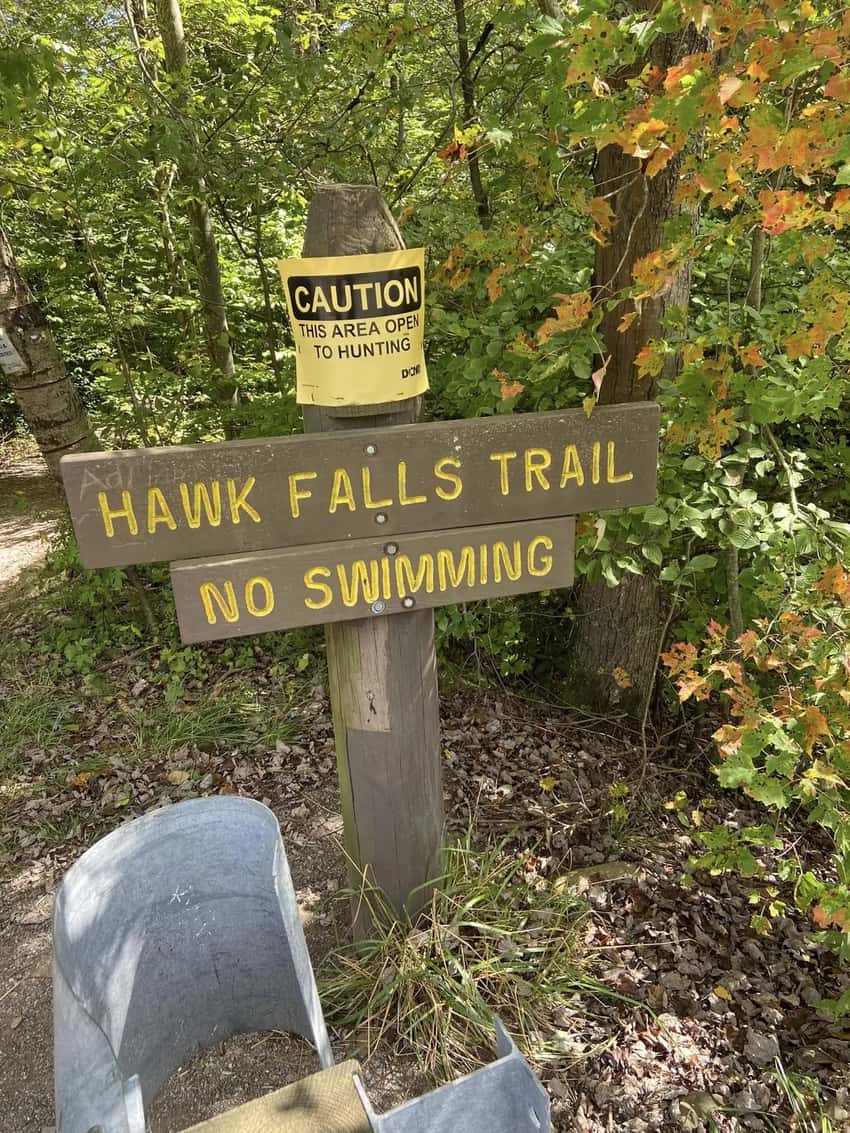
Overflow Parking
When the main lot fills, people park on the shoulder of PA Route 534. The shoulder is narrow and the highway moves fast. Some sections are illegal, check for posted signs before leaving your car. This is a real safety situation, not a minor inconvenience.
The cleaner alternative: arrive early enough for the main lot, or pair Hawk Falls with the Hickory Run Boulder Field on the same day and time your Hawk Falls visit for mid-afternoon when the lot opens up.
The Trail
The Descent (0.6 Miles)
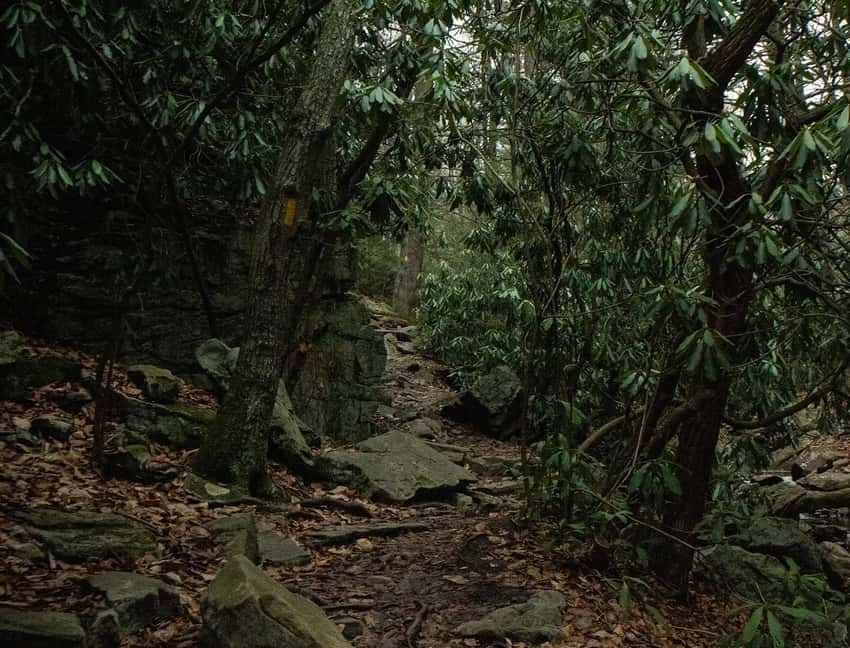
The trail is marked with yellow blazes and starts at the back of the parking lot. From the trailhead it drops immediately, not steeply, but consistently downhill, through thickets of rhododendron that close overhead in a dense canopy.
This is the feature most people come for before they have even seen the falls. In late June and early July when the rhododendron is in bloom, the tunnel goes pink. Outside of bloom season it is a tunnel of dark green, still worth seeing, just less dramatic.
You cross a wooden footbridge over Hawk Run roughly halfway down. After the bridge the trail follows Mud Run downstream toward the confluence where the two streams meet and drop.
Footing: Roots and rocks throughout, with muddy sections after rain. Well-marked. Nothing technical.
Photography Tips: Capturing Hawk Falls
Shaded Gorge Lighting: Hawk Falls faces north and is heavily shaded by gorge walls. This is actually advantageous:overcast light is superior to direct sun because it eliminates harsh shadows that direct sun creates in a tight gorge. Shoot on an overcast day for even, diffused light across the white water and dark rocks.
Rhododendron Tunnel Composition: The dense rhododendron tunnel is the defining visual feature. Shoot looking down the tunnel in early morning light when mist may be present. Late June and early July when the tunnel is in full pink bloom creates the most dramatic color. Use a standard focal length (35-50mm) to show depth through the tunnel.
Morning Window: Early morning provides the cleanest light on the falls themselves. The gorge shadows are less extreme, and any morning mist adds atmospheric quality. Avoid midday when shadows become harsh in the tight gorge space.
Long-Exposure Water Technique: If you have a tripod, slow your shutter speed to 1-2 seconds with an ND filter to create silky water motion. ISO 100-200 minimizes noise. Overcast days often allow this without additional filtering since the natural light is already darker.
Foreground Interest: Use rocks and rhododendron foliage as foreground elements to create depth. The pool at the base of the falls is small but clear:frame it with surrounding vegetation to show the intimate scale of the location.
Avoid Midday Harsh Light: The combination of a north-facing gorge and dense rhododendron canopy means midday creates flat, low-contrast images. Morning (6-10 AM) is the optimal window.
The Falls
Hawk Falls drops 25 feet at the point where Hawk Run meets Mud Run. The combined flow hits a sandstone ledge and drops into a pool. The setting is close and hemmed in by vegetation, you do not get a long view of the falls. You get an intimate one.
In spring the volume is higher and the falls are louder. By August in a dry year the flow can be noticeably reduced.
The pool at the base is small, clear, and consistently occupied by people wading despite the posted prohibition on swimming. Rangers do patrol and do issue tickets. Designated swimming in Hickory Run State Park is at Sand Spring Lake, not at the waterfall.
Photography: The falls face north and are shaded by the gorge walls. Overcast light is better than direct sun for the same reasons it is at any waterfall, even light without the high-contrast shadows that direct sun creates in a tight gorge. Morning on an overcast day is the cleanest window.
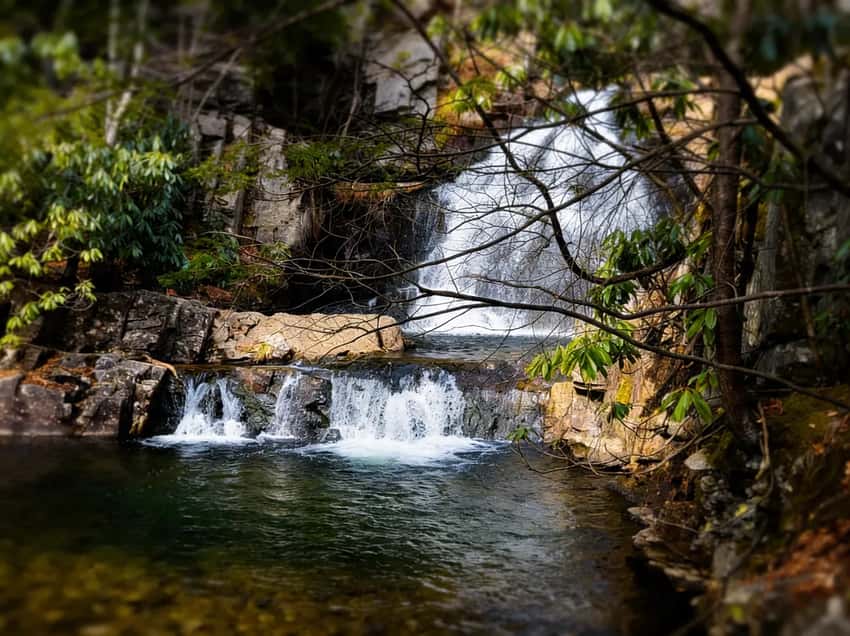
Hawk Falls, 25 feet where Hawk Run meets Mud Run.
The Return (0.6 Miles Uphill)
The return is the same trail in reverse. The 200 feet of elevation you lost on the way down comes back over less than two-thirds of a mile. That is a steeper average grade than it sounds when your legs are already worked from stream scrambling near the falls. Take it at a deliberate pace, particularly on the rooted sections where slips happen more often going uphill than down.
Safety
Swimming prohibition. Swimming at waterfall pools is prohibited throughout Pennsylvania State Parks. At Hawk Falls this is enforced. Wading technically falls in a gray area, but jumping from the ledge into the pool is exactly the behavior that draws tickets. The designated swimming area is Sand Spring Lake.
Ticks. The rhododendron corridor and the brushy sections along Mud Run are prime tick habitat from May through October. The dense, moist understory holds ticks at higher density than open ridge trails. Wear long socks pulled over pants cuffs, use repellent, and do a full check before getting in the car. Dogs especially, the rhododendron thickets are particularly thick with them.
Winter. The trail is open in winter but becomes genuinely icy on the descent sections. Microspikes are the correct response, not optional caution. The shaded downhill on frozen roots is not a casual winter walk.
Footing year-round. Sneakers work on this trail. Hiking boots are better, specifically for the muddy sections and the slick bridge crossing in wet weather. Nothing technical is required, but flat-soled shoes on wet roots go badly.
Extending the Hike: Orchard Trail Loop (2.5 Miles)
For hikers who want more mileage after the falls, the Orchard Trail connects from the Hawk Falls area back to PA Route 534 via a longer loop. Total distance is approximately 2.5 miles. The route follows Mud Run upstream from the falls before looping through scrubby forest back to the road.
The Orchard Trail is quieter than the Hawk Falls out-and-back section. On a busy summer weekend the falls have crowds. The Orchard Trail extension typically does not. If you want more time in the woods and less time standing at an overlook with other people, this is how to get it. Alternatively, check out the nearby Shades of Death Trail for a more rugged creek-side experience.
Seasonal Guide
Spring (April through May): Water volume is highest. The trail is damp and muddy in spots. Ticks activate in May.
The rhododendron is not yet in bloom but the forest is green and cool. Best for the falls themselves.
Late June through early July: Rhododendron bloom peak. This is the specific window most photographers and repeat visitors target. Water volume may be lower than spring but the tunnel of pink flowers compensates. The combination of full bloom and a sunny morning is the highest-quality visual experience this trail offers.
Summer (July through August): Hot. The shaded trail corridor keeps the walk cooler than open ridge hikes, but the parking lot situation is at its worst. Water volume drops by August. Ticks active throughout.
Fall (September through October): The rhododendron canopy is evergreen, so foliage color is not dramatic on the trail itself. Water volume recovers with fall rain. Parking is better than summer peak but still fills on October weekends. Ticks remain active through September.
Winter: Icy on the descent. Microspikes required. Beautiful in a stark way with the dark rhododendron tunnels against snow. The parking lot is essentially empty.
What to Bring
- Water, at least one liter per person. No water source on trail
- Sneakers minimum, hiking boots preferred, roots and mud throughout
- Tick kit, tweezers or tick hook. Essential May through October given the understory density
- Bug repellent, the moist rhododendron corridor also holds mosquitoes in summer
- Microspikes, if visiting October through March when ice is possible on the shaded descent
FAQ
When should I arrive for parking? Before 9 AM on weekends from May through October. After 3 PM also works. Avoid the 10 AM to 3 PM window on weekends without a backup plan.
How hard is the trail? Moderate for a 1.2-mile hike. Short but steep on the return, rooty throughout. Not appropriate for people who cannot handle an uneven surface, but accessible to most fitness levels if they take it slowly.
Can I swim at Hawk Falls? Swimming is officially prohibited. Rangers patrol and do issue tickets. Wading is common and occurs in a gray area. Jumping from the ledge is the specific behavior that gets cited.
When do the rhododendrons bloom? Late June through early July. The window is roughly two to three weeks and peaks in the last week of June most years.
Is there a longer option? Yes. The Orchard Trail loop adds about 1.3 miles for a 2.5-mile total. Access it from the Hawk Falls area by following Mud Run upstream.
Is this a good first hike for kids? Yes, the distance and destination (a waterfall) both work well for older kids. The descent is manageable. The return uphill requires more effort but covers the same short distance. Very young children may struggle with the roots and the uphill return.
Hawk Falls is the right first Hickory Run hike for most visitors. If you are pairing it with a full day in the park, the Boulder Field is 20 minutes east by car and covers a completely different kind of Pennsylvania geological experience.
For everything else Hickory Run State Park has within its boundaries, the park guide covers the full trail inventory and facilities. To explore additional peaks, river gorges, and waterfalls across the surrounding mountains, our Poconos regional guide covers what else is within easy reach.