Hickory Run State Park: 16 Acres of Rocks and a Trail Called Death
The Boulder Field, Hawk Falls, and Shades of Death. Here's how to hike Hickory Run State Park without the crowds.
Key Takeaways
- The Boulder Field Car Hack: You can drive directly to the National Natural Landmark. Use the one-way Sand Spring Road loop; keep in mind this dirt road closes during winter snows and low-clearance cars should proceed slowly.
- Hawk Falls Secret: The parking lot on PA-534 is tiny. To skip the crowds at the top, follow the trail downstream to Mud Run, then hook right on the unmarked path to reach the base of the falls for a much better view.
- Sand Spring Day Use: For families with kids, the Sand Spring area offers a swimming beach and massive shady picnic groves, making it the best “base camp” for a day trip.
- Silent Hiking Alternative: Mud Run is a premier wild trout stream canyon. The hiking here is significantly quieter and more rugged than the high-traffic Boulder Field or Hawk Falls areas.
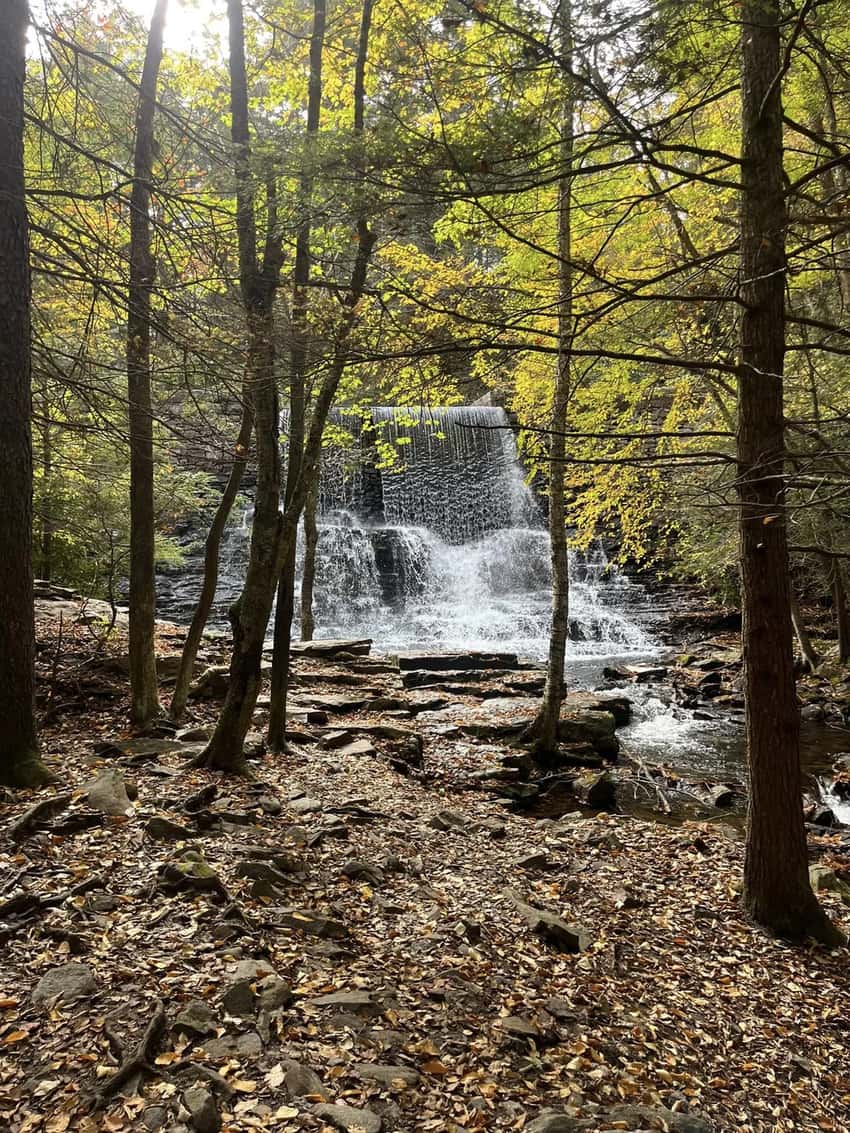
- Shades of Death: This is the park’s most beautiful trail, following a tea-colored creek through dense rhododendron tunnels and over mossy 1800s logging dams.
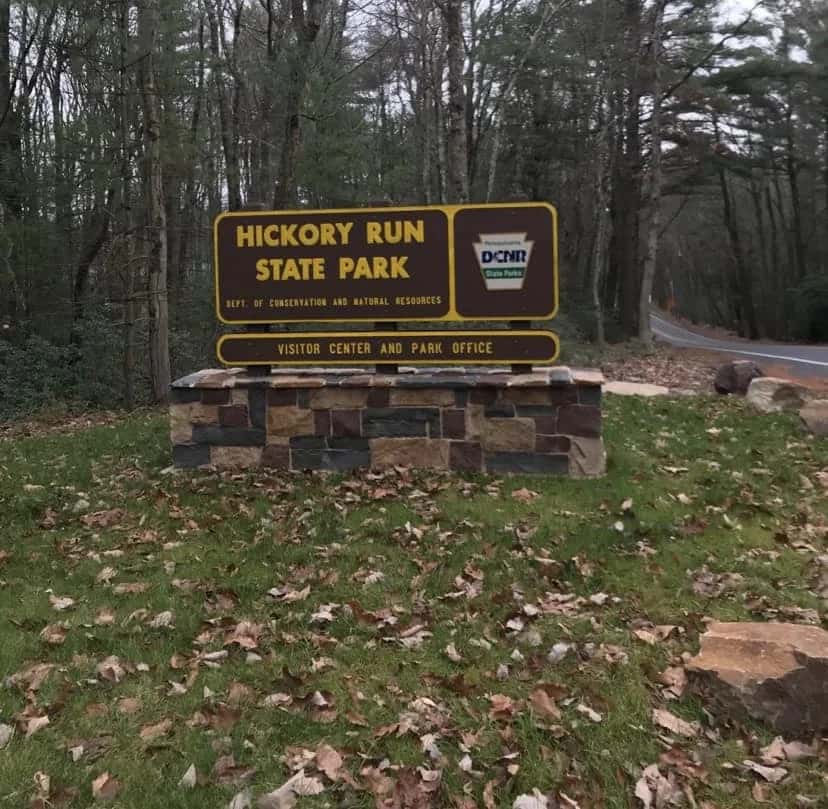
Hickory Run State Park is nearly 16,000 acres of Poconos wilderness. It is home to the Boulder Field, a 16.5-acre glacial relic left by the last Ice Age, and some of the region’s best stream-side hiking.
Or you can hike 3.5 miles through the woods to earn it. Either way, it’s the weirdest thing in the Poconos.
Visit the PA DCNR site for camping reservations and check AllTrails for current trail conditions.
The Boulder Field (Why You’re Here)
What It Is
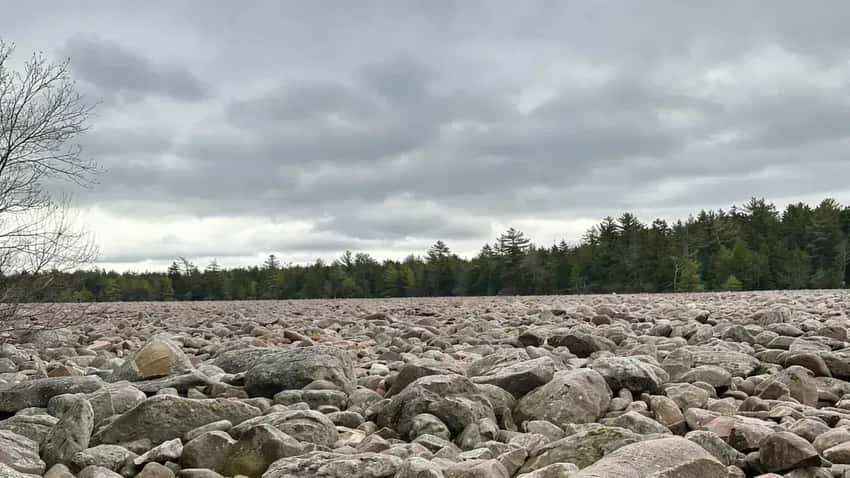
A 16.5-acre field of boulders left behind by the last Ice Age 20,000 years ago. It’s the largest periglacial boulder field in the Appalachians. The rocks range from 3 feet to 30 feet long and are stacked 10-12 feet deep. It looks like the surface of another planet.
The field formed through gelifluction - freeze-thaw cycles fractured upslope bedrock, and the resulting boulders moved downslope in a slurry of rock, sand, and ice over permafrost. Some boulders have been exposed for nearly 600,000 years.
How to Get There
You have two options:
- Drive: Take the 5-mile one-way dirt loop (Boulder Field Road) off Sand Spring Road. Low-clearance cars can make it if you go slow. The road closes in winter.
- Hike: The Boulder Field Trail is 3.5 miles one-way from SR 534. It’s a slog, but you’ll earn the view.
What to Expect
- Terrain Reality: Massive boulders ranging from 3-30 feet long, stacked 10-12 feet deep. You’re literally walking on top of rocks, not between them
- Footing Challenge: The gaps between boulders are deep and unpredictable. Ankles can twist easily. Sturdy hiking boots are essential
- Shade: Zero shade. The boulders absorb heat. Summer visits are hot and intense. Go early morning or late afternoon
- Crowds: Popular but not overwhelming outside peak season. Summer weekends can see 50+ people. Fall weekends get busier
- Water Access: Bring plenty, 2-3 liters minimum. There’s no water on the field
- Slippery When Wet: Rain makes these rocks treacherous. Wait 48 hours after rain for them to dry
- Time Reality: Most people spend 30-45 minutes on the field. It’s not a long hike, but it feels like an alien landscape
The Trails: Waterfalls and Ominous Names
Hawk Falls (The Easy Win)
- Distance: 0.6 miles one-way
- Difficulty: Moderate descent, harder climb back
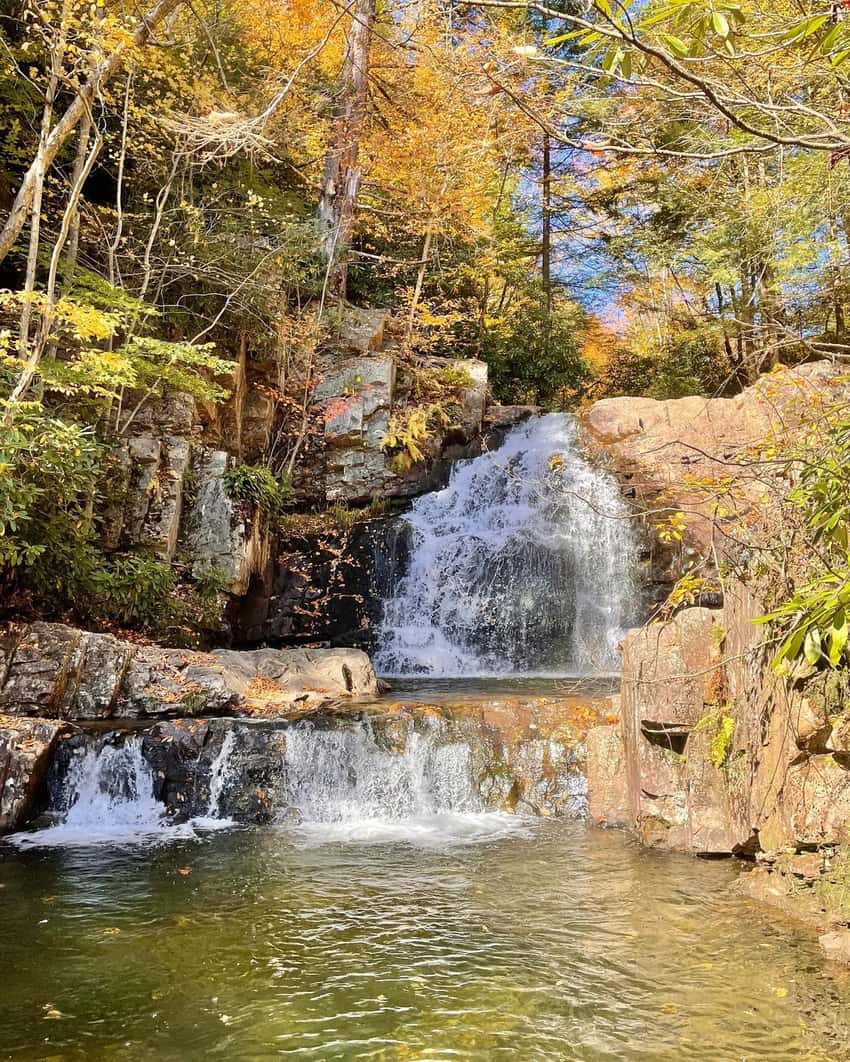
- The Waterfall: 25 feet tall, natural, and you can’t swim in it (rangers ticket for this).
- Full Guide: See our complete Hawk Falls Trail Guide for parking strategy and swimming rules.
- Parking: Small lot off PA-534. It fills by 9 AM on weekends and overflows onto the highway (dangerous). Get there early.
What to Expect
- Descent: Steep but short (0.6 miles). Stone steps and roots. Takes 15-20 minutes down
- The Return: Climb back up is harder than the descent. Budget 25-30 minutes for the return
- Crowds: Popular and it shows. On weekends, you’ll see 20-30+ hikers. Early morning (before 8 AM) is much quieter
- Parking Reality: The lot fills by 9 AM. Overflow parking on PA-534 is dangerous (traffic). Arrive by 8:30 AM or skip for Shades of Death
- Photography: The waterfall is 25 feet but not particularly scenic. Best photos are early morning with soft light
- Water Level: Spring runoff (April-May) creates impressive flow. Summer is lighter. Fall has moderate flow
Shades of Death (The Name Is Real)
- Distance: 1 mile one-way
- Full Guide: See our detailed Shades of Death Trail Guide for the full boulder scramble itinerary.
- Pro Tip: The roots are slicker than ice when wet. Bring trekking poles.
What to Expect
- Trail Condition: Wet and rooty year-round. Even in dry periods, the dense rhododendron creates perpetual shade and moisture
- Difficulty Reality: Steeper than distance suggests. 1 mile climbs 300 feet elevation. Roots are the primary hazard (slicker than ice when wet)
- Rhododendron Factor: Dense tunnel creates a claustrophobic, dark atmosphere (hence the name). Great in summer for shade, atmospheric year-round
- Root Hazards: The 1800s logging dams and rocky terrain means constantly exposed, slippery roots. Trekking poles are essential
- Crowds: Quieter than Hawk Falls. Most people do Hawk Falls instead, so this trail feels less crowded
- Water Level: Sand Spring Run varies with seasons. Spring (April-May) is impressive. Summer is trickles. After rain, the stream can be challenging to cross
- Time Reality: 1 mile one-way takes 30-40 minutes due to the root challenges and climbing
Sand Spring Lake (The Only Place You Can Swim)
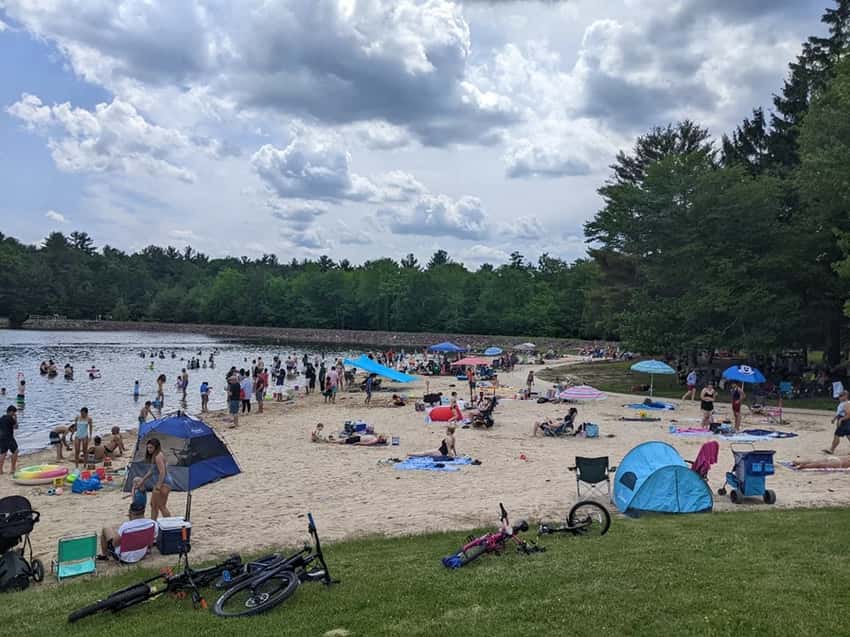
Swimming is ONLY allowed at Sand Spring Lake. The beach is open late May through mid-September with lifeguards on duty. There’s a snack bar, picnic tables, and restrooms. In winter, the lake is open for ice skating (unmonitored - check ice thickness yourself).
⚠️ Warning: Do NOT swim at the waterfalls. Rangers ticket for this, and people have died jumping off rocks.
Camping (381 Sites, Bears Included)
Hickory Run has one of the largest campgrounds in the Poconos:
- 381 sites total
- 115 electric hookups
- 15 full hookup sites (water, sewer, electric)
- Dogs allowed in designated sites
- Bears are active: Food storage rules are strictly enforced. Store everything in your vehicle, even for short periods.
Pro Tip: Sites around 158 are spacious and private (no electric). Full hookup sites cost around $42/night.
What You Need to Know Before You Go
Parking at Hawk Falls Is a Nightmare
The lot is tiny and fills by 9 AM on weekends. Cars overflow onto PA-534, which is dangerous. Get there early or skip it for Shades of Death.
Don’t Drive to Boulder Field on a Saturday
The dirt road becomes a one-way traffic jam. Hike from the campground if you’re staying overnight.
Swimming Rules Are Strict
Lake only. Not the waterfalls. Rangers will ticket you.
Bears Are Real
This is an active bear area. Follow food storage rules or risk a fine (and a bear in your campsite).
Insider Tips
Boulder Field Strategy: The dirt road (Boulder Field Road) can be a one-way traffic jam on busy Saturdays. Either go early (before 9 AM) or hike the Boulder Field Trail from the campground for a quieter, longer experience. The 3.5-mile hike is worth it for solitude.
Hawk Falls Parking Reality: The lot fills by 9 AM on weekends. If you arrive at 9:30 AM, you’ll likely find no parking. Arrive by 8:30 AM or choose Shades of Death (which has better parking at the park office).
Shades of Death Off-Season: This trail is fantastic in fall (September-October) when the rhododendrons create a dark tunnel and the forest is atmospheric. In summer, it’s wet and rooty but less crowded.
Sand Spring Lake Swimming: The water is cold (spring-fed). Even in August, expect 65-70°F water. Swimming is only allowed at the lake, not the waterfalls (rangers enforce this with $100+ fines).
Bear Camping Reality: Food storage is serious. Even leaving a granola bar in your tent can attract bears. Use bear-proof lockers or your vehicle. Hickory Run has active black bear populations in summer.
Boulder Field Photography: Early morning (sunrise) or late afternoon (golden hour) light works best. Midday sun creates harsh shadows between the boulders. Fall foliage (September 25-October 15) surrounds the field with color.
Combine with Lehigh Gorge: Hickory Run is only 20 minutes from Lehigh Gorge State Park. A two-park weekend could include Boulder Field hiking + biking the D&L Trail.
Best Time to Visit
- Spring: Waterfalls are flowing, rhododendrons are blooming (June). Fewer crowds.
- Summer: Peak season. The lake is open for swimming, but parking is a nightmare.
- Fall: The Boulder Field is spectacular in October when the surrounding forest turns orange and red. Cooler temps make hiking more pleasant.
- Winter: Boulder Field Road is closed, but you can hike to it. The lake is open for ice skating (unmonitored).
FAQ
Is the Boulder Field natural? Yes, it’s a glacial relic from 20,000 years ago.
Can you swim in the waterfalls? No. Swimming is only allowed at Sand Spring Lake. Rangers ticket for waterfall swimming.
Why is it called Shades of Death? Settlers found the dense, dark forests and swampy soil “deathly” to farm and traverse.
Is it dog-friendly? Yes, except the swimming beach. Leashes required.
Explore More
Nearby Boulder & Waterfall Spots:
- Ricketts Glen State Park (45 minutes): 21 waterfalls and a more technical hike. Busier but more dramatic
- Lehigh Gorge State Park (20 minutes): Biking the D&L Trail and the Lehigh River. Different activity, same region
- Hawk Mountain Sanctuary (30 minutes north): Raptor migration and scenic overlooks in the Lehigh Valley
Regional Guides:
- Full Poconos region guide for more waterfalls and hiking options
- PA State Parks complete list for other geological wonders across the state
Similar Experiences:
- Hickory Creek Wilderness Area: More boulder fields and rugged terrain in the same region
- Promised Land State Park: Lakes and easier hiking in the Poconos, 30 minutes away