Little Buffalo State Park: Shoaff's Mill, Covered Bridge & Holman Lake
A 923-acre park where functional 19th-century mills meet lake trails. History, wildflowers, and family-friendly loops in Perry County.
Key Takeaways
- Mill Timing Hack: Shoaff’s Mill is only fully operational (grinding corn) on select holiday weekends and during the October Apple Festival. Call the park office in advance to confirm the volunteer schedule; seeing the 18-foot water wheel in motion is the park’s top experience.
- Clay’s Bridge Angle: For the best photo of Clay’s Covered Bridge, approach from the Fisherman’s Path. This angle allows you to frame the bridge with Holman Lake in the background, rather than just the woods.
- Middle Ridge Overlook: The popular History Walk is mostly flat. For a bird’s-eye view of the lake, take the short but steep climb on the Middle Ridge Trail. It’s the only spot in the park with a genuine “vista.”
- The Pool Secret: Little Buffalo features a massive, modern swimming pool and spray park that is significantly cleaner and better maintained than most regional public pools. It is the perfect “cool down” after a morning of history-centric hiking.
- Clay Pits History: On the History Walk, look for the small, pond-like depressions. These are the original Clay Pits that supplied the pottery industry in Perry County throughout the 1800s.
Little Buffalo State Park sits in Perry County as a 923-acre preserve that blends recreational lake trails with genuine industrial history. The centerpiece is Shoaff’s Mill, a 19th-century grist mill that still operates and grinds cornmeal during seasonal demonstrations. This isn’t a ruined relic. It’s a functional piece of history where you can watch a 200-year-old water wheel generate real power.
The park’s second major draw is Clay’s Covered Bridge, a Burr-arch structure that connects Holman Lake’s eastern shore to the mill area. Together, these two sites anchor a “History Walk” that reveals how communities powered themselves before electricity.
This guide will show you how to loop the mill and bridge, tackle the challenging Buffalo Ridge Trail if you want elevation gain, and time your visit to avoid the October Apple Festival crowds.
The History Walk: The Signature Experience
This is the park’s defining loop. A flat, 2.5-mile circuit connects three historical elements: Shoaff’s Mill, the clay pits that fed pottery operations, and Clay’s Covered Bridge.
The Route
Distance: 2.5-mile loop
Elevation Gain: Minimal (under 100 feet)
Difficulty: Easy. Flat, well-maintained path.
Trailhead: Park at the main lot near Shoaff’s Mill office building (GPS: 40.5339, -77.1236). The loop begins directly from the mill parking area.
Trail Type: Dirt and gravel path. ADA-accessible in many sections. No water sources on trail.
Season: Spring (April-May) for wildflowers and mill operations. Fall (September-October) for foliage and cooler temps. October Apple Festival makes the park chaotic. Visit mid-week instead.
Time: 1-1.5 hours for a casual pace with photo stops.
What to Expect
Shoaff’s Mill: The trailhead sits adjacent to the mill building. You’ll see the water wheel immediately. The mill is still operational, on demonstration days (typically weekends May-October), volunteers grind cornmeal using water power. The sound of the machinery and the smell of fresh cornmeal creates an immersive historical experience.
The History: The mill was built in the 1800s and powered by water diverted from Holman Lake. It served the surrounding farming community for generations. The machinery is original or preserved period-correct equipment. Walking through the grounds, you’re literally standing in 19th-century infrastructure.
Clay’s Covered Bridge: Approximately 1 mile into the loop, you reach this Burr-arch covered bridge. It’s scenic and photogenic, especially with Holman Lake framed in the background. The bridge is in excellent condition and still carries foot traffic (vehicles are restricted).
Holman Lake Shoreline: The loop follows the lake’s northern shore, providing water views throughout. The path is shaded by mature hardwoods in spring/fall, but summer heat exposure exists on open sections.
Historic Canal Remnants: Along the route, you’ll see remnants of the historic canal that once powered the mill and connected communities. The canal is mostly filled in or converted to the modern trail, but interpretive signs explain the history.
Photography: Wide-angle lens captures the mill and water wheel. Telephoto (70-200mm) isolates the covered bridge through trees. Golden hour (6-7 AM sunrise or 4-6 PM late afternoon) creates best light on the water and mill.
Crowds: Busy during the October Apple Festival (late month). Quieter mid-week year-round. Spring (April-May) and fall (September-October) are pleasant but increasingly crowded.
Buffalo Ridge Trail: The Challenge
If the History Walk feels too easy, Buffalo Ridge Trail offers serious elevation gain and rugged terrain.
The Hike
Distance: 2.5-mile loop (or 1.5 miles one-way to ridge)
Elevation Gain: 600-700 feet (relentless climb)
Difficulty: Strenuous. This is the park’s most challenging hike.
Trailhead: Fisherman’s Path parking area (separate from mill parking. GPS: 40.5245, -77.1189). A 0.5-mile connector walk leads to the Buffalo Ridge Trail proper.
Trail Type: Rocky, rooted, steep. Boots essential. No water sources.
Season: Fall (September-October) is best. Spring is muddy. Summer is hot on exposed ridge sections. Winter requires traction aids.
What to Expect
The Climb: The first 1 mile gains 400 feet at relentless grade. No mercy sections. Your legs will be burning.
Charcoal Hearths: At the ridge top, you’ll see archaeological evidence of historical charcoal production (flat, circular depressions where charcoal was burned for ironworks). These are subtle features, interpretive signs explain the significance.
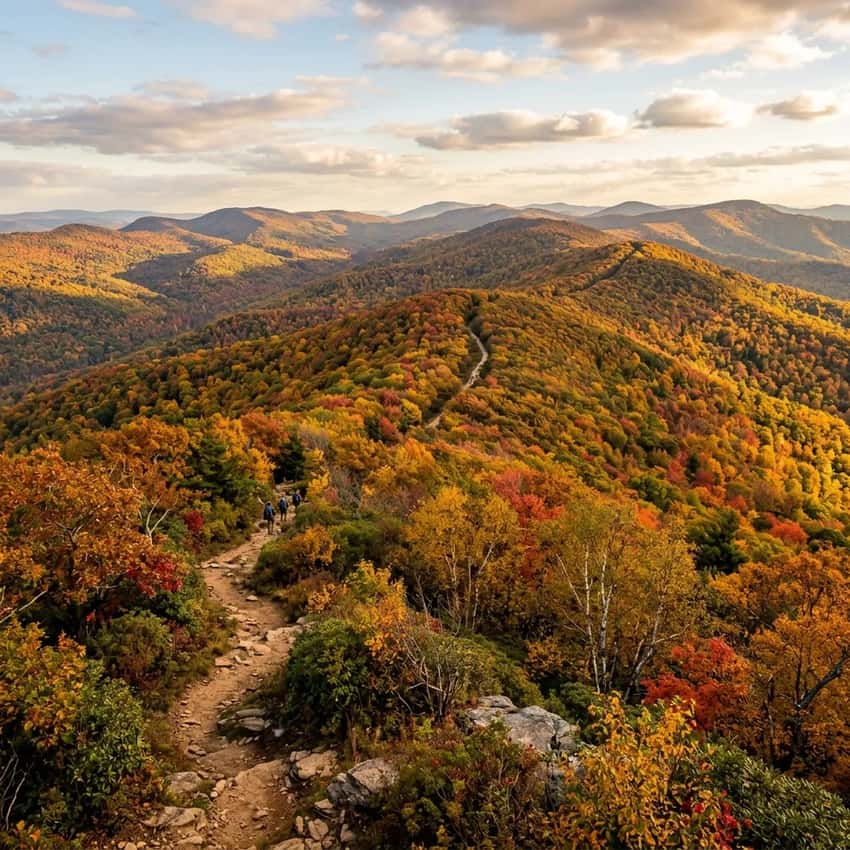
The View: The ridge overlooks Holman Lake to the south and Tuscarora Mountain country beyond. On clear fall days, views extend 10+ miles.
Rocky Footing: The trail is technical with significant root systems and scattered rocks. Hiking boots with ankle support are essential. Trail runners or light shoes will be painful.
Crowds: Much quieter than the History Walk. Most park visitors stick to the lake trails. Buffalo Ridge rarely feels crowded.
Time Reality: The 2.5-mile loop with 600+ feet elevation gain takes 2-3 hours depending on pace and fitness level. This is a serious workout.
Loop Strategy
Many hikers do the 1.5-mile one-way climb to the ridge, enjoy the view, then return the same way (3 miles, 2-2.5 hours). A full loop option exists but requires trail-finding and adds complexity.
Family-Friendly Alternatives: Easy Loops
If you want to hike without the Buffalo Ridge effort, two flat alternatives serve families and casual walkers.
Blue Ball Trail
Distance: 1.5-mile loop
Elevation: Minimal
Difficulty: Easy
Trail Type: Dirt path, well-maintained, ADA-accessible in most sections
What to Expect:
- Flat walk along Holman Lake shoreline
- Mature hardwoods providing shade
- Frequent benches for resting
- High probability of seeing waterfowl and deer
- Kids love this one. It’s perfectly paced for families
Time: 45 minutes to 1 hour casual pace
Fisherman’s Path
Distance: 1.2-mile loop
Elevation: Minimal
Difficulty: Easy
Trail Type: Gravel, well-groomed, ADA-accessible
What to Expect:
- Designed for fishing access, so it follows the lakeshore closely
- Excellent water views throughout
- Fishing piers accessible from the path (if you have gear)
- Very light crowds. Feels remote despite being short
- Good for wildlife observation
Time: 30-45 minutes casual pace
Shoaff’s Mill: The Centerpiece
The mill is the park’s soul. Understanding its significance elevates the entire visit.
What It Is
A 19th-century grist mill that ground cornmeal using water power from Holman Lake. The water wheel still turns. The millstones still exist. The machinery is original or period-accurate preservation.
Mill Demonstrations
When: Typically weekends May-October (check ahead. Dates vary by volunteer availability)
What Happens: Staff members (volunteers) demonstrate how the mill operates. You hear the water wheel turn, see the grain enter the hopper, watch it drop to the millstones, and see cornmeal emerge. The entire process takes 10-15 minutes.
Best Time: Early morning (before 10 AM) for quieter demonstrations and better lighting for photography.
Photo Opportunity: The water wheel is the star shot. Wide-angle lens captures the entire mechanism. Golden hour (6-7 AM) light on the wheel is excellent.
Family Interest
Kids find the mill fascinating. The moving parts, the sounds, and the “food production” aspect engage them in ways static museums don’t. The smell of fresh cornmeal is memorable.
Holman Lake
The 34-acre lake is the park’s water hub. It was created by damming Holman Run in the 1800s and powered the mill historically.
Swimming
Yes, there is a large swimming pool with a sprayground (separate from the lake). The lake itself is used for fishing but not swimming.
Fishing
Excellent fishing throughout the year. The lake is stocked with trout (spring and fall), bass, and panfish. Fishing piers are accessible and ADA-friendly.
Licensing: PA fishing license required ($26.97 for 7 days). Trout stamp ($10.97) needed for trout targeting.
Wildlife
Bald eagles occasional winter visitors. Waterfowl year-round (ducks, geese). Deer sightings common at dawn/dusk.
Seasonal Considerations
Spring (April-May)
Best For: Wildflower blooms, mill reopens for demonstrations
Conditions: Trails muddy but manageable. Water running high (good for mill flow). Weather 55-70°F.
Crowds: Lighter than fall. Spring break families on weekends.
Summer (June-August)
Best For: Swimming pool, family outings
Conditions: Hot (75-85°F). Lake water warm. Trails dusty and worn. Mosquitoes in shaded areas.
Crowds: Peak season. Weekends are busy.
Fall (September 25-October 15)
Best For: Foliage, comfortable hiking temps, mill still operating
Conditions: Cool (60-75°F), colorful ridges. October Apple Festival (typically late month) makes park chaotic.
Pro Tip: Visit September 25-October 5 (early fall foliage) or go mid-week in late October to avoid the festival crowds.
Crowds: Very busy on weekends during peak foliage. Go weekdays for solitude.
Winter (December-March)
Best For: Quiet solitude, ice fishing
Conditions: Cold (30-45°F). Trails icy. Holman Lake freezes solid (safe for ice fishing by mid-January).
Crowds: Very quiet. Holiday season (Dec 26-Jan 1) has family visitors.
Photography Tips
Best Mill Shot: Sunrise (6-7 AM) with water wheel backlit. Golden light on the stone building is excellent. Wide-angle lens captures the entire structure and water wheel.
Best Covered Bridge Shot: Shoot from the lake side (south face) in late afternoon (4-6 PM) golden hour. The bridge silhouetted against water and colorful ridge backdrop is dramatic.
Best Lake Shot: Early morning (6-8 AM) from the Blue Ball Trail section. Mist rises off the water. Trees reflect. Peaceful and serene.
Best Fall Foliage: Shoot from the ridge overlooking Holman Lake. September 25-October 15, late afternoon (4-6 PM) side-lighting emphasizes foliage color. Telephoto lens isolates color patches on ridge.
Insider Tips
Avoiding Apple Festival Crowds: The October Apple Festival (typically last week of October) transforms the park into a fair. Thousands of people, craft vendors, and festival atmosphere. If you want the history and hiking experience without crowds, visit September 25-October 5 (peak foliage, pre-festival) or go mid-week.
Mill Demonstration Timing: Call ahead or check the park website for exact demonstration times. They’re popular and fill early. Weekday mornings (Tuesday-Thursday, 10 AM) are quietest.
Parking Strategy: Mill area lot fills on weekends. Arrive before 10 AM or use the Fisherman’s Path parking (less busy, separate from mill area).
Holman Lake Fishing: The accessible fishing piers are excellent for families and mobility-limited visitors. The lake is well-stocked. Spring (post-stocking) and fall are most productive.
Buffalo Ridge Solo Hiking: This trail sees light use. Tell someone where you’re going and when to expect you back. Cell service is spotty.
Covered Bridge Photography: The bridge is photogenic from multiple angles. Shoot from the water side (south), the trail side (north), and from the bridge interior. Each angle tells a different story.
Walking the Canal: Historic canal remnants are subtle. An interpretive guide from the park office explains the canal system and its historical significance. The guide makes the flat walk into a history lesson.
Best Time to Visit
Spring (April-May): Wildflowers bloom. Mill reopens for demonstrations. Comfortable temps (60-70°F). Light crowds.
Summer (June-August): Swimming pool season. Lake water warm. Hot hiking (avoid mid-day). Family-friendly.
Fall (September 25-October 15): Peak foliage. Comfortable temps (60-75°F). Mill still operating. Avoid late October (Apple Festival chaos).
Winter (December-March): Ice fishing season. Quiet solitude. Cold but beautiful. Trails icy.
FAQ
When are mill demonstrations? Typically weekends May-October. Call the park office to confirm dates and times. Varies by volunteer availability.
Can you swim? Yes, in the designated swimming pool (with sprayground). The lake itself isn’t for swimming.
Is the park dog-friendly? Yes, dogs allowed on leash throughout the park and trails.
How far is Newport? Little Buffalo is 10 minutes south of Newport, PA (Perry County seat). Newport has basic services (gas, food, stores).
Is it wheelchair accessible? Yes, several trails are ADA-accessible, including portions of the History Walk and Fisherman’s Path. The mill area is accessible.
What’s the Apple Festival? Late October festival with craft vendors, food, and activities. Transforms the park into a fair. Draws thousands. Skip if you want a hiking/history focus.
Explore More
Nearby History & Hiking:
- Duncannon Hawk Rock (30 minutes): Steep Appalachian Trail terrain with Susquehanna River views. Contrast to Little Buffalo’s flat history walk.
- Governor Dick Mt. Gretna (35 minutes): Tower views and Dinosaur Rocks. Similar “post-hike ritual” culture (Jigger Shop).
- Valley Forge National Historical Park (60 minutes): Revolutionary War history combined with hiking on Mount Joy and Mount Misery.
Nearby Abandoned Places:
- Stony Valley Ruins & SGL 211 Abandoned Town (40 minutes): Backcountry ruins and history like Little Buffalo’s mill preservation.
- Centralia Abandoned Town (60 minutes): Coal mining history and abandoned settlement exploration.
Regional Guides:
- Full South Central PA region guide for comprehensive Harrisburg area hiking and history
- Best Hikes Near Harrisburg for additional Perry and Lebanon County options
Similar Park Experiences:
- Locust Lake State Park: Similar lake-focused park 45 minutes northeast with camping
- Rocky Gap State Park: Maryland state park with operational historic mill and lake (90 minutes away)
- Boiling Springs Lake: Closer historic mill and lake in Cumberland County (20 minutes)
Little Buffalo rewards visitors who care about history. The mill is a genuine piece of 19th-century infrastructure still in operation. The covered bridge is beautiful.
The lake is peaceful. And the flat History Walk makes the entire experience accessible to families and casual walkers.
Park at the mill. Walk the History Loop. Watch a demonstration if timing allows.
See the covered bridge. Then bring your kids to watch cornmeal being ground the way communities did 150 years ago.